

Website monetization tools help you earn money from your website by turning traffic into revenue. These tools work through methods like ads, affiliate marketing, subscriptions, or selling products. They simplify earning online and support creators by automating processes, analyzing user behavior, and offering flexible income options.
Key Takeaways:
- Ad Networks: Earn through ad placements (CPM or CPC models).
- Affiliate Marketing: Promote products/services and earn commissions on sales.
- Subscriptions: Charge for premium content or memberships.
- Analytics: Track performance and optimize strategies.
- Automation: Tools like AI manage ads, paywalls, and user engagement.
Platforms like Lideroo make this process easier with no-code setups, AI-powered insights, and subscription management for as low as $49/month. Start monetizing your website with tools that save time and boost income.
12 Ways To Make Money With Your Website In 2025
Main Features of Website Monetization Tools
Effective website monetization tools are packed with features designed to turn your site's traffic into a steady income stream. These tools simplify the process for website owners, making it easier to focus on creating content while maximizing revenue opportunities.
Easy Integration
Today's monetization tools are built for simplicity. They integrate smoothly with popular content management systems through easy-to-use plugins or simple code snippets [3]. For example, many site builders now come with built-in eCommerce features, allowing you to add products, set prices, and manage inventory directly from your dashboard. Similarly, ad management plugins let you control where ads appear on your site, ensuring optimal visibility and performance [3][4].
As Panda Bloggers puts it:
"The website monetization platforms create opportunities for you to make money by selling inventory like ad space without putting in extra time and effort" [5].
Once these tools are up and running, they often include performance insights, helping you fine-tune your revenue strategies.
Analytics and Performance Tracking
Monetization tools don't just help you earn - they also help you improve. With advanced analytics, these tools track user interactions, identify new revenue opportunities, and measure how well your strategies are working [6]. They provide data on key metrics like average revenue per user, conversion rates, retention rates, and lifetime value [6][7].
Many tools feature real-time reporting dashboards, giving you a clear view of your site's performance. You'll see where your visitors come from, which pages bring in the most revenue, and how long users stay engaged [8][2]. This kind of monitoring is critical, especially when considering the massive impact of ad fraud, which cost the advertising industry $35 billion in 2020 and could reach $50 billion by 2025 [8].
But tracking is just the start - these insights can be used to create flexible and effective monetization strategies.
Flexible Monetization Options
One of the biggest strengths of modern monetization tools is their flexibility. They support a variety of revenue streams, including affiliate marketing, display ads, selling digital products, online courses, webinars, paid memberships, sponsored content, and even donations [4]. Tools with dynamic pricing models allow you to adjust prices based on real-time data and user behavior. Plus, options like subscription models, freemium strategies, and pay-per-use systems make it easier to cater to different user preferences [9][10].
The secret to success is finding the right mix of strategies that align with your goals. As content writer Catherine Luchavez explains:
"The best monetization strategy is the one that supports your goals and your daily grind" [4].
The potential for growth is enormous. For instance, global spending on digital ads is expected to climb from $734.24 billion in 2024 to $843.48 billion in 2025. Meanwhile, the e-learning market is projected to hit $490.2 billion by 2029 [4].
Luchavez offers this practical advice:
"To earn money smarter, not harder, focus on valuable content, user experience, and strategies that grow with you" [4].
Types of Website Monetization Tools
Website owners have several ways to turn their traffic into revenue, with three main categories of monetization tools leading the charge. Each category offers a distinct method for generating income, tailored to different site types and audiences. Knowing how these tools work can help you pick the best fit for your website's goals.
Ad Networks
Ad networks serve as middlemen, connecting advertisers with publishers and managing ad placements and payments. They primarily operate on two payment models: CPM (Cost Per Thousand Impressions) and CPC (Cost Per Click). With CPM, you earn a set amount every time an ad is shown to 1,000 visitors. CPC, on the other hand, pays you whenever someone clicks on an ad.
When choosing an ad network, consider factors like ad formats that complement your site's layout, targeting options that align with your audience, competitive payouts, reliable payment systems, and the platform's reputation. It's also crucial to ensure that the ads you display are relevant to your content and maintain ethical standards. Digital advertising is booming, with spending expected to exceed $830 billion by 2026, making this a lucrative option for many website owners [11][12][13].
Affiliate Marketing Tools
Affiliate marketing platforms enable websites to earn commissions by promoting third-party products or services. This performance-based model is a powerhouse, accounting for 16% of online sales in the US [14].
Here’s how it works: you include affiliate links on your site, and when visitors make a purchase through those links, you earn a commission. It’s a win-win - websites get paid for driving sales, while brands gain customers without hefty upfront advertising costs. In fact, for every $1 spent on affiliate marketing, brands typically see a return of $12 [16]. This efficiency has led brands to invest heavily in creator partnerships, with spending projected to hit $12 billion by 2025 [15].
Many websites have successfully leveraged affiliate marketing by strategically placing links that resonate with their audience, driving consistent revenue.
Subscription and Premium Content Platforms
Subscription models offer a recurring revenue stream by providing exclusive content, features, or services that aren’t available for free. The idea is straightforward: if your audience enjoys your free content, they might be willing to pay for something extra.
"When you sell premium content, you're selling it directly to your audience. Typically, audience members already enjoy the content you create for free. The premium model lets them pay to access exclusive content they wouldn't get otherwise."
Unlike ad-based models, subscription platforms generate income directly from users. They often include perks like early access to content, ad-free experiences, exclusive events, or workshops that justify the recurring fee. The secret to success here is consistently delivering value that exceeds the cost, ensuring subscribers feel they’re getting more than their money’s worth.
These tools provide a variety of ways to monetize your website, each with its own strengths and strategies for turning traffic into profit.
How Website Monetization Tools Generate Revenue
Website monetization tools transform your site into a revenue generator by combining automation, user engagement techniques, and versatile business models. These tools rely on data-driven strategies to maximize earnings while allowing creators to focus on what they do best.
Automated Revenue Streams
Modern monetization tools operate around the clock, using algorithms to strategically place ads where they're most likely to attract clicks. Dynamic affiliate links automatically update to highlight products with high conversion rates, and AI keeps testing ad layouts and placements to improve click-through rates and overall revenue [5]. This means less manual work for creators and more time to focus on producing great content.
Paywall automation is another key feature. These systems can manage access to premium content without requiring manual oversight. For example, a paywall might activate when a user hits their free article limit, offering subscription options tailored to their behavior or preferences. It’s a seamless way to convert casual visitors into paying subscribers.
Improved User Engagement
The smartest monetization tools don’t just throw ads or affiliate links at users randomly. Instead, they use data to identify the best moments to introduce monetization opportunities. According to McKinsey, data-driven strategies significantly improve performance [18]. This approach ensures that monetization feels helpful rather than intrusive.
Features like premium content previews, exclusive member perks, and personalized product recommendations enhance the user experience. These strategies not only increase engagement but also encourage visitors to spend more time on your site, boosting both loyalty and revenue potential.
Support for Multiple Business Models
Relying on a single revenue stream can be risky, which is why successful creators often diversify. As William Gasner, CMO of Stack Influence, puts it:
"These days, successful influencers often diversify their income across several streams. Relying on just one source (like YouTube ad revenue alone) can be risky, so it's smart to mix and match different monetization methods" [1].
Modern monetization platforms make this diversification easier by allowing creators to manage multiple revenue streams from a single dashboard. You can run display ads, affiliate campaigns, and premium subscriptions simultaneously, all through one interface. This unified approach creates a stable monetization ecosystem. Whether it’s subscription models, freemium tiers, tiered memberships, or one-time purchases, these tools ensure that when one revenue stream slows down, others can help balance the scales.
sbb-itb-dfa823a
Built-In Monetization Tools in Lideroo
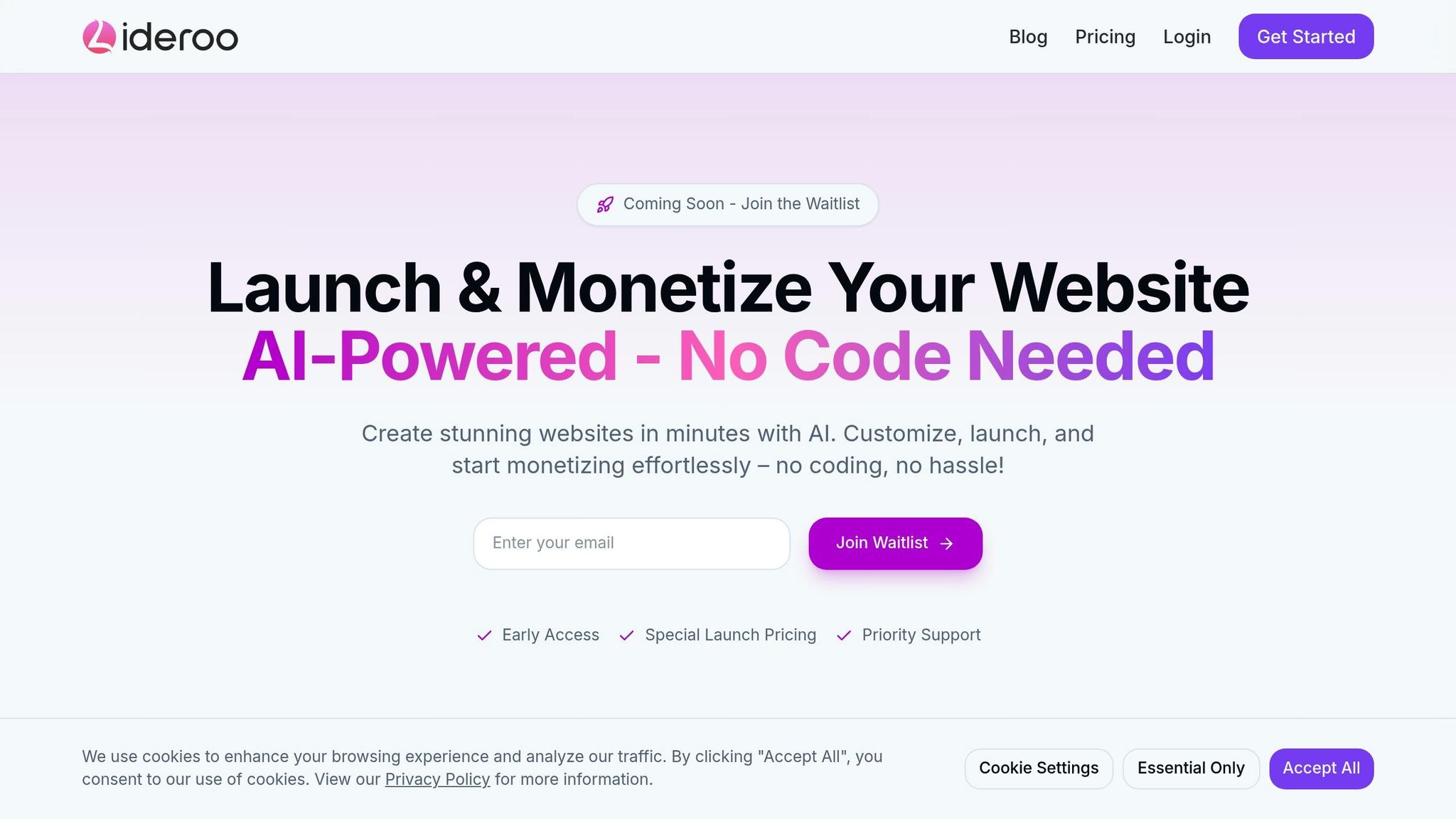
Lideroo brings together a suite of monetization tools within a single platform, making it easier for creators to focus on their content without juggling multiple systems. Here's a closer look at the standout features that make Lideroo a powerful choice for monetizing your work:
Premium Content and Subscription Features
With Lideroo, you can turn any website into a revenue-generating platform - no coding required. The system allows you to set up paywalls, create tiered memberships, and offer content previews that encourage subscriptions.
The platform manages the entire subscription process automatically. For example, when a visitor hits their free content limit, Lideroo steps in with personalized subscription options tailored to their browsing habits. Whether you're monetizing a directory or exclusive blog posts, the system adapts to meet your specific needs.
Lideroo also simplifies payments. It supports all major credit cards and automates recurring billing, so you can easily manage pricing tiers and control access permissions without lifting a finger.
AI-Powered Optimization
Lideroo takes monetization a step further with its built-in AI tools. These tools analyze user behavior to fine-tune your strategies. The AI determines the best placement for subscription prompts, calculates the ideal timing for activating paywalls, and identifies premium content that performs well.
By tracking which articles drive the most subscriptions, the AI suggests content strategies to replicate that success. It also monitors engagement patterns to predict when visitors are likely to upgrade to paid plans, ensuring subscription offers are presented at just the right moment.
Simple Setup for Beginners
Lideroo's no-code design makes it incredibly beginner-friendly. Using visual interfaces and pre-configured templates, you can activate monetization features without needing technical expertise. Forget about complicated payment gateway setups or user management headaches.
Setting up a subscription model is quick and straightforward. Define your pricing structure using Lideroo’s visual editor, choose which content to make premium, and activate the paywall system. From there, the platform handles everything - subscription page creation, user registration, and access control.
For just $49/month with the Starter plan, you’ll unlock all of Lideroo’s monetization tools, including features like custom domain support and branding removal - essential for building trust with paying subscribers. If you’re managing multiple sites, the Agency plan ($299/month) supports up to 20 websites, making it perfect for agencies or users running several revenue-generating platforms.
The drag-and-drop editor also allows you to fully customize subscription pages and premium content layouts, ensuring that the design aligns with your brand and provides a seamless user experience. No coding required, just results.
Conclusion: Growing Revenue with Website Monetization Tools
Website monetization tools have transformed how creators turn online traffic into steady income. By automating processes like subscription management, AI-driven optimization, and flexible payment systems, these platforms free up creators to focus on delivering quality content.
According to Harvard Business School, 75% of companies selling directly to consumers now use subscription models, and subscription billing is projected to grow by 50% to 100% within the next five years [20]. This shift highlights a major change in how audiences engage with content and how creators establish lasting revenue streams.
"Monetization is not just about making money - it's about finding the right strategy that aligns with your business model and audience." - Honeygain [19]
AI-powered tools add another layer of efficiency by analyzing user behavior to fine-tune pricing strategies, cutting operational costs by up to 25% [21]. These tools also enhance user experience and boost conversion rates with features like automated content delivery.
Platforms like Lideroo integrate these advancements into an intuitive system, making monetization simpler than ever. For details on pricing and features, see the Built-In Monetization Tools section.
The real question isn't whether to monetize your website - it’s how soon you can start turning your content into dependable revenue. With tools like Lideroo, the path to consistent income becomes clearer, proving that adopting these innovations is key to sustaining online growth.
FAQs
How do website monetization tools simplify earning revenue online?
Website monetization tools simplify the process of earning income by automating tasks like managing subscriptions, placing advertisements, and delivering exclusive content. These tools take care of the behind-the-scenes work, allowing you to concentrate on creating meaningful content for your audience while revenue flows steadily in the background.
By cutting down on manual efforts, these tools save time and help maintain consistent earnings. Whether it’s through ad placements, paid memberships, or premium content, they’re built to transform your website into a dependable income generator with less hassle.
What should I look for when selecting an ad network for my website?
When picking the right ad network for your website, pay attention to a few key factors. Look at the targeting options they offer, the variety of ad formats available, and the quality of traffic they deliver. It's also important to check if the network provides real-time analytics to monitor performance and has dependable customer support to resolve any issues quickly.
Don't forget to assess whether the network fits within your budget and aligns with your revenue goals. Taking the time to evaluate these elements will help you choose an ad network that not only boosts your monetization efforts but also maintains a positive experience for your site visitors.
How can I use analytics to improve my website's monetization strategy?
How to Boost Your Website’s Monetization
If you want to make the most out of your website, start by defining clear goals and setting key performance indicators (KPIs) to track your progress. Tools like Google Analytics 4 can help you monitor essential metrics such as traffic sources, user engagement, and revenue performance.
Dive into user behavior data to uncover patterns - for instance, which content performs best or which pages have high bounce rates. Regularly analyzing reports can reveal areas that need improvement, like speeding up sluggish pages or fine-tuning monetization strategies, such as premium content or subscription models. By making thoughtful, data-driven updates, you can boost your revenue while also creating a better experience for your audience.