
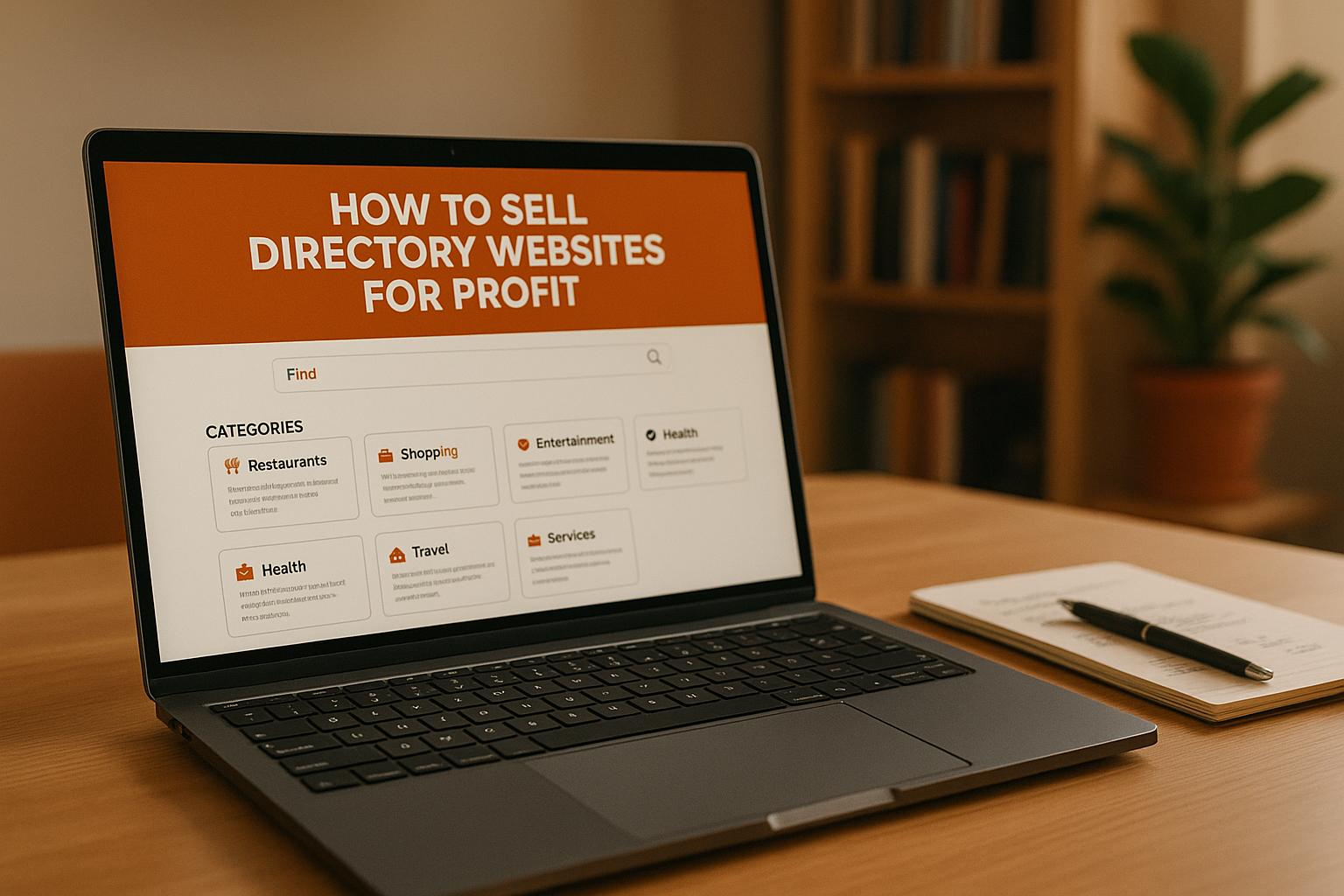
Directory websites can be highly profitable if built and sold strategically. Here's how they generate income and can be sold for maximum profit:
- Revenue Streams: Charge businesses $30–$100/month for listings, offer premium placements, sell ad space, or use pay-per-lead models. Successful directories can earn $1,000–$10,000/month.
- Niche Selection: Choose a niche with high demand and low competition. Use tools like Google Trends and SEMrush to validate your idea. Examples include local restaurants, legal services, or coworking spaces.
- Building the Website: Use no-code tools like Lideroo to create a professional directory quickly. Focus on intuitive design, mobile optimization, and strong search functionality.
- Optimizing for Sale: Boost SEO, grow traffic, and set up multiple revenue streams. Track performance metrics like traffic, revenue, and user engagement to show buyers the site's value.
- Selling the Website: Create a sales package highlighting revenue, growth potential, and key features. Use platforms like Empire Flippers to connect with buyers and ensure a smooth transfer process.
5 Profitable Directory Websites You’ve Never Heard Of
How to Pick a Profitable Niche for Your Directory
Choosing the right niche is the backbone of creating a directory website that thrives. The U.S. Small Business Administration sums it up well:
"Market research blends consumer behavior and economic trends to confirm and improve your business idea" [3].
The goal is to identify that perfect intersection where demand meets opportunity - where buyers see a clear value in what you’re offering. Let’s break down how data-driven research and strategic thinking play a role in this process.
Research Market Demand
Before committing to any niche, it’s essential to validate your idea with solid data. Tools like Google Trends can help you identify rising search patterns, while platforms like SEMrush and Ahrefs provide insights into keyword volumes [2]. These tools reveal whether there’s genuine interest in your chosen area.
Affluent users often gravitate toward niche online communities [2]. To understand your audience better, dive into demographic data using resources like Pew Research Center or Statista [2]. Additionally, explore LinkedIn groups and Reddit discussions to uncover real conversations about challenges and needs in your target market [2].
Ask yourself these critical questions: Is this problem causing frustration, wasted time, or financial loss? Are people relying on outdated solutions? Would they pay for a faster or more effective fix? [1]. If the answer is "yes" to most of these, you’re likely looking at a viable niche.
You can also go straight to the source - survey potential users. Use social media polls or conduct quick interviews with individuals in your target income bracket [2]. These insights will help you refine your strategy and focus on what truly matters to your audience.
Find the Right Balance Between Narrow and Broad
This is where many directory creators hit a roadblock.
"Your niche should be narrow enough to differentiate you from competitors but broad enough to ensure there's a viable market for your services" [4].
The key is to strike a balance. For example, "Fitness for everyone" is too broad, making it difficult to stand out. On the other hand, "Fitness coaching for busy moms" narrows the focus while still appealing to a sizable audience [4].
The same concept applies across industries. "Ingredients of instant coffee" is overly specific, while "Hot drinks" is too broad. A niche like "Coffee" finds that middle ground [5]. Starting slightly broader than you think is wise - then refine your focus based on user feedback and market response [4].
To test your niche’s potential, create buyer personas. Consider demographics, pain points, and spending habits [4]. If you’re struggling to identify enough people who fit your criteria, you may need to broaden your scope. Conversely, if your persona could describe millions of people, it’s time to narrow things down.
Examples of Profitable Directory Niches
Once you’ve done your research and refined your strategy, real-world examples can provide inspiration for profitable niches:
- LocalEats focuses on the U.S. restaurant scene, boasting over 10,000 listings [6].
- FindLaw combines a lawyer directory with legal content, catering to professionals and consumers alike [6].
The fitness industry is another promising area. Athletic Business Buyer’s Guide connects sports and fitness businesses [6], while PuppySpot taps into the lucrative pet services market [6].
Tech directories often attract premium interest. For instance, StartupHub.com lists tech startups across Argentina, Estonia, Germany, and the U.S. [6], and Clutch catalogs digital marketing agencies from over 130 countries, complete with sharable shortlists [6].
Location-based services are consistently profitable. WeWork has built a directory of coworking spaces spanning over 700 locations worldwide [6], and Zillow dominates real estate with its comprehensive Buy, Sell, Rent, and Agent Finder features [6]. Travel directories like GetYourGuide simplify trip planning with categories like sports, food, and nature [6].
Specialized service directories also thrive. Senior Care Directory serves an underserved audience with easy-to-navigate, large-font interfaces [6], while The GT Scholars Program offers an educational directory featuring over 250 free online learning resources [6].
These examples highlight niches that combine specificity with clear demand. By focusing on industries with consistent growth and addressing real needs, you can set your directory up for long-term success [2].
Build a Directory Website That Buyers Want Using Lideroo
Once you've honed in on your profitable niche, the next step is to create a directory website that stands out. A professional, well-designed site with clear revenue potential is key - especially if you plan to sell it later. Buyers are drawn to websites that offer immediate value and show potential for growth. Here's how you can build a directory site that appeals to both users and potential buyers.
Use Templates and AI Tools to Build Faster
When it comes to building directory websites, speed is a game-changer. The quicker you can launch, the sooner you can start driving traffic, collecting valuable user data, and building metrics that attract buyers. With Lideroo, you can streamline this process using their tailored templates and AI tools.
Lideroo’s pre-built templates come equipped with essential features like search functionality, listing pages, and user forms. These templates give you a strong starting point while allowing easy customization through a drag-and-drop editor. Adjust colors, fonts, and layouts to fit your niche - all without needing to write a single line of code.
And here's where it gets even easier: Lideroo’s AI tools can handle the heavy lifting when it comes to content creation. Instead of spending hours writing category descriptions, location pages, or service details, you can generate SEO-friendly content in minutes. This not only saves time but also ensures the content is consistent and engaging, encouraging businesses to list their services on your directory.
Design Your Site Structure for Easy Use
A clean, intuitive site structure is crucial for making your directory appealing to both users and potential buyers. Visitors should immediately understand your site's purpose and be able to navigate it with ease. A well-organized site also signals to buyers that your website is primed for success.
Start by creating clear category hierarchies that make sense for your audience. For instance, if you’re building a restaurant directory, organize listings by cuisine, location, or price range rather than alphabetically. Think about how your users will search for information and structure your site accordingly.
Mobile-first design is another must. Since most users access websites from their phones, your directory needs to look and function just as well on smaller screens as it does on desktops. While Lideroo’s templates are already optimized for mobile, double-check that all key features display correctly on mobile devices.
Don’t overlook the importance of search functionality. Users should be able to filter results by location, category, price, ratings, and other relevant criteria. Adding breadcrumb navigation is another small touch that can make a big difference, helping users retrace their steps easily. Consistent design elements - like a unified color scheme or layout - also enhance your site’s professional appeal. Just like Apple’s clean, recognizable design builds brand trust, your directory’s cohesive look can signal to buyers that it’s well-maintained and ready for growth.
Set Up Revenue Streams
A visually appealing site is great, but buyers are also looking for websites that generate income. Setting up multiple revenue streams before listing your directory for sale can significantly increase its appeal.
Here are some monetization options to consider:
- Standard listings: Charge businesses a fee to be included in your directory.
- Featured placements: Offer premium spots in search results or category pages for an additional fee.
- Enhanced premium listings: Provide upgrades like extra photos, detailed descriptions, or social media links, which justify higher listing fees.
- Pay-per-lead models: Earn revenue each time a user submits a contact form or requests a quote, typically charging businesses $1–$5 per lead.
- Advertising space: Sell banner ads or sponsored content. Sponsored posts can bring in $50–$500 per post, while pay-per-click ads generally range from $0.10–$0.50 per click.
- Membership tiers: Use a freemium model - offer basic listings for free and charge for premium features through subscription plans.
Lideroo simplifies this process with built-in monetization tools that handle payments, subscriptions, and user access. By implementing diverse revenue streams early on, you not only make your directory profitable but also show potential buyers that the site has room to grow.
sbb-itb-dfa823a
Increase Your Directory's Value Before Selling
Creating a directory website is only the first step. If you want to sell it for a great price, you need to show buyers that it delivers real results. They’re looking for evidence of traffic, user engagement, and growth potential. Here’s how you can make your directory more appealing to potential buyers.
Improve SEO and Grow Traffic
Search engine optimization (SEO) is one of the most effective ways to increase your directory’s value. Better rankings mean more organic traffic, which directly boosts your selling price. Did you know that 71% of search traffic clicks go to the first page of Google? That’s why SEO improvements can make such a big difference [8].
Start with keyword research. Use tools like Google Keyword Planner or SEMrush to find keywords that have decent search volume but aren’t too competitive [7]. Then, optimize your meta titles, descriptions, and content around those keywords.
Adding fresh content to your directory can also drive traffic. Businesses that blog get 97% more links and 55% more visitors than those that don’t [8]. Consider creating location-specific pages, covering local events, or writing guides that answer common questions like “What is X?” to attract informational searches [10][11].
Don’t forget about technical SEO. Speed up your site by compressing images and improving load times - pages that take longer than one second to load can double bounce rates [12]. Also, make sure your site is mobile-friendly since 61% of global website traffic comes from mobile devices [12].
Local SEO is another goldmine for directory websites. Make sure your Google My Business listing is optimized, and keep your NAP (Name, Address, Phone number) consistent across platforms. Encourage businesses listed in your directory to leave reviews, as these can significantly boost rankings. In fact, directories with perfectly matched business listings saw a 65.09% improvement in rankings [9].
Finally, build quality backlinks. Reach out to influencers, participate in niche forums, and create content that naturally attracts links from other authoritative sites. Strong backlinks amplify all your other SEO efforts [7].
With improved SEO and traffic, you’ll have the data to back up your directory’s performance.
Track and Present Performance Data
Numbers don’t lie, and buyers want to see them. By presenting clear performance data, you turn your directory into a data-backed investment.
Start by tracking your traffic sources - organic search, direct visits, social media, and referrals. Show conversion rates for key actions like business listings, contact form submissions, and premium upgrades. Highlight returning visitor sessions to prove user loyalty [12].
Since mobile accounts for most web traffic, make sure you can demonstrate strong performance across all devices. For context, nearly two-thirds of websites maintain bounce rates below 40%, and 50% of websites achieve 4-6 page views per visit [12]. Use these benchmarks to position your directory favorably.
Create a performance dashboard that updates automatically. Include trends like month-over-month growth, seasonal traffic patterns, and peak periods. This gives buyers a clear picture of your directory’s current performance and future potential.
Take inspiration from Cambridge Education Group, which improved conversion rates by analyzing high-traffic pages and enhancing content pathways. As Suzanne Bull, their Director of Content and Communications, explained:
"We've looked at improving pages with a high number of new visitors. By providing better links to more Top-of-the-Funnel content on these pages, we've seen an improvement in conversion rates." [12]
These insights help buyers see the value in your directory.
Add More Content and Users
Beyond SEO and analytics, adding dynamic content and encouraging user participation can significantly increase your directory’s appeal. Buyers are drawn to directories with active communities and rich content because they offer multiple revenue opportunities and require less ongoing management.
User-generated content is especially valuable. Allow businesses to claim and update their listings, which keeps information accurate while reducing your workload. Features like star ratings and reviews are also a must - 87% of shoppers read online reviews for local businesses, so this functionality boosts user engagement [13].
Interactive features like forums, Q&A sections, and photo uploads keep users engaged. Premium listing options, such as enhanced profiles or social media integration, not only create immediate revenue streams but also showcase the directory’s monetization potential [14][15].
Regularly publishing content is another key strategy. Well-crafted blog headlines can drive 500% more traffic, so focus on writing about industry trends, successful businesses in your directory, and helpful guides [8]. This positions your directory as an authority in its niche while boosting SEO and user engagement.
Building a directory with active users, updated content, and diverse features takes effort, but the rewards are worth it. A thriving directory attracts more visitors, commands higher ad rates, and ultimately sells for a premium price.
Market and Sell Your Directory Website
Once you've optimized your directory's traffic and revenue streams, it's time to take the next step: selling it. To maximize your profit, focus on presenting your directory professionally, choosing the right sales platform, and ensuring a seamless transfer process.
Create a Professional Sales Package
Think of your sales package as your directory's resume - it needs to make a strong impression and tell a compelling story backed by solid data.
Start with a headline that grabs attention and highlights your directory’s main value. For example, instead of a generic "Local Business Directory for Sale", you could write: "Profitable Restaurant Directory Generating $2,500/Month with 15,000 Monthly Visitors." A headline like this immediately communicates the value to potential buyers [18].
Next, explain how your directory solves problems and why it’s valuable. Tailor this section to your audience - whether they’re investors looking for passive income or entrepreneurs targeting a specific niche. The more you align with their goals, the more appealing your directory will be [18].
Use feature and benefit bullet points to highlight key selling points, such as revenue streams, traffic metrics, and growth potential. For instance:
- "Premium listing upgrades generate $800/month with a 40% conversion rate."
- "SEO-optimized for 150+ local keywords with first-page rankings."
These details help buyers see the value and potential of your directory [18].
Add testimonials to build trust. Positive feedback about your directory’s effectiveness or user experience can reassure potential buyers of its quality [18].
Consider offering a product guarantee to ease buyer concerns. This could include a 30-day support period or assistance with the transition. Such guarantees can reduce hesitation and make your offer more attractive [18].
Finally, include a concise dashboard of key performance metrics. Share monthly revenue breakdowns, expense reports, and profit margins in a clear, easy-to-read format. This transparency builds confidence and supports your asking price.
Find the Right Place to Sell
With a polished sales package ready, the next step is choosing the best platform to sell your directory. Different platforms cater to different types of buyers and offer varying levels of support.
Empire Flippers is a standout option for selling online businesses. They handle the entire transfer process, so you don’t have to worry about managing software purchases or dealing with web hosts [16].
Ace Chapman from AceChapman.com notes:
"My clients & I have done countless deals with them and they do an awesome job for both the buyer and seller in each transaction" [16].
Travis Jamison, Founder of Smash Digital, adds:
"Some of the huge fears actually are that the numbers could be faked. Empire Flippers are validating that the real revenue is there, the real profit is there" [16].
When selecting a marketplace, research factors like traffic, fee structures, support quality, and regional reach [17]. Decide whether you prefer an open marketplace - offering a larger audience but more competition - or a private marketplace, which is more exclusive and provides better control over the process [17].
You can also take a dual approach: list your directory on major platforms while reaching out directly to potential buyers in your niche. Local business associations, industry forums, and networking groups are great places to find buyers already familiar with your market.
The key is matching your directory with the right audience. For example, a local restaurant directory might appeal to hospitality entrepreneurs, while a B2B services directory could attract digital marketing agencies looking to expand.
Once you’ve found a buyer, focus on ensuring a secure and smooth transfer.
Complete a Safe Transfer Process
A seamless transfer process protects both you and the buyer, ensuring your directory continues to run smoothly.
Domain transfer is the first critical step. Unlock the domain, obtain the Authorization Code (EPP code), and initiate the transfer on the buyer’s registrar platform. Double-check DNS settings to ensure uninterrupted functionality [20].
For the website and database transfer, back up all files from your server before proceeding [19]. Use secure methods like SFTP or SSH to transfer sensitive data. Update DNS settings to point to the new hosting provider, and test the site across devices and browsers to confirm everything works as expected [21].
Minimize downtime by planning the transfer carefully.
Post-transfer monitoring is essential to ensure the site functions smoothly. Tools like Google Analytics can help you spot and resolve any issues quickly [19]. Provide the buyer with all necessary login credentials, including hosting, domain registrar, email, social media, and third-party services.
Rob Atkinson from togethertowherever.com highlights the importance of professional transfer support:
"There are so many things that can go wrong selling your site and even as a buyer. They are facilitating that whole process for you, it's so hands off and it's worth every penny in my opinion. Let them guide you through the process, you're gonna love the results" [16].
Create a transition document that includes passwords, account details, renewal dates, and operational procedures. Add contact information for key service providers and note any ongoing relationships with businesses listed in your directory. This level of organization demonstrates professionalism and helps ensure the buyer’s success.
Finally, plan for a support period after the sale. Offering 30–60 days of email support to answer questions or resolve technical issues can leave a lasting positive impression and even lead to referrals down the road.
Conclusion: Turn Your Directory Into a Money-Making Asset
Creating and selling directory websites can be a lucrative venture, especially with the growing demand for local search [22]. The formula for success is straightforward: pick a profitable niche, build smartly, optimize consistently, and sell at the right time. The value of your website is often determined by its monthly net profit, with sites typically selling for 30 to 45 times that amount [25]. Every improvement you make directly impacts the final sale price.
Platforms like Lideroo, powered by AI and no-code technology, remove the usual technical hurdles. According to Gartner, by 2025, 70% of new applications will be developed using low-code or no-code solutions [24]. This positions you perfectly to leverage cutting-edge tools, featuring drag-and-drop functionality and AI-driven content generation, to maximize both value and revenue potential.
The advantages of no-code tools go beyond simplicity. They also make your directory more appealing to potential buyers. In fact, 90% of no-code users report faster business growth, and these platforms contribute to a 33% increase in company innovation [23][24]. This means you’re not just saving time - you’re also staying ahead in a competitive market.
With voice search usage skyrocketing by 146% since 2019 - growing from 3.25 billion to 8 billion users [22] - your optimized directory is primed to capture high-intent traffic. Voice assistants often pull answers from the top three organic search results, making it critical to rank well [22]. As your directory climbs the rankings, its value as a marketable asset grows significantly.
Start building your directory with Lideroo today. With proven strategies for monetization and powerful no-code tools, you can turn your directory into a profitable, sellable asset. The right buyer is out there, ready to invest in your success.
FAQs
What should I consider when choosing a niche for my directory website?
When deciding on a niche for your directory website, start by looking at market demand - you’ll want to ensure there’s enough interest to draw in both users and listings. Take a close look at the competition to spot any gaps or untapped opportunities that could set your site apart. It’s also smart to focus on niches with strong earning potential, like those that allow for monetization through paid listings or advertising.
Don’t forget about your target audience. Understanding what they need and value will help you design a platform that resonates with them. Lastly, picking a niche you’re genuinely interested in or have expertise in can make the entire process more enjoyable and boost your chances of building a successful directory.
How can I show potential buyers the value of my directory website?
To demonstrate the worth of your directory website to potential buyers, focus on showcasing key metrics and tangible results that highlight its profitability and growth potential. Emphasize figures like monthly revenue, traffic statistics, and user engagement metrics, as these are the primary factors buyers evaluate. Many sellers rely on a standard valuation method, which involves multiplying the monthly revenue by 24 to 36, depending on the niche and its growth trajectory.
You can also strengthen your pitch by sharing success stories or testimonials from businesses listed on your site. These examples can help illustrate the real-world impact of your platform. Additionally, providing details about your marketing efforts - such as SEO strategies, social media campaigns, or paid advertising initiatives - can showcase how traffic and listings are generated. By offering a clear picture of both the financial performance and operational strategies behind your website, you'll position it as a valuable opportunity for serious buyers.
What are the best ways to prepare a directory website for higher traffic and revenue before selling?
To get your directory website ready for maximum traffic and revenue before selling, there are a few important steps to take.
Start by focusing on SEO. Use relevant keywords, create engaging and informative content, and build strong backlinks to improve your search engine rankings. A site that ranks well attracts more organic traffic, which is a major selling point for potential buyers.
Next, work on improving the user experience. Ensure your site loads quickly, has an intuitive layout, and is fully optimized for mobile devices. A smooth and enjoyable browsing experience keeps visitors coming back, which adds to the overall appeal and value of your site.
Finally, establish effective monetization strategies. Consider options like affiliate marketing, sponsored listings, or offering premium subscriptions. These income streams not only boost profitability but also make your website a more enticing, ready-to-earn opportunity for buyers.