

Struggling to make your directory site unique? Here's how to stand out in a competitive market:
Niche Focus: Target a specific audience (e.g., local restaurants or healthcare providers) for better engagement.
AI Tools: Use AI for advanced search, personalized user experiences, and automated content.
U.S.-Friendly Design: Include features like mobile-first layouts, U.S. date formats (MM/DD/YYYY), and prices in USD.
Monetization: Offer tiered listings, memberships, and lead generation fees to generate revenue.
User Experience: Simplify navigation with search bars, category buttons, and mobile-friendly designs.
Quick Tip: Start with free listings to grow traffic, then add premium options for revenue.
Want a head start? AI-powered platforms like Lideroo provide templates and tools to launch quickly and efficiently.
Finding Your Market Focus
Identify and refine your market focus using data-driven strategies to uncover areas where you can offer something distinct and impactful.
Market Gap Analysis
Spotting gaps in the market can reveal areas overlooked by existing directory sites. Here’s a step-by-step guide to conducting a thorough analysis:
Define Your Starting Point
Tap into your expertise to focus on specific niches like healthcare equipment or alternative therapies. A clear starting point keeps your research focused.Understand Customer Pain Points
Dive into platforms like Reddit, Twitter, and industry forums to uncover recurring complaints or unmet needs. These conversations often highlight what users are missing from current services.Assess the Competition
Use tools like Google Trends and SEO platforms to gauge market demand and evaluate competitors. Look for areas where existing directories lack features or fail to meet user expectations.
Pinpointing these gaps will naturally lead you to the audience most likely to benefit from your offering.
Audience Identification
Once you’ve identified potential gaps, it’s time to understand your audience deeply. This ensures your niche aligns with their needs and preferences, helping you design features and content that truly connect.
Key Areas to Analyze
| Aspect | What to Examine | Why It’s Important |
|---|---|---|
| Demographics | Age, location, income level | Helps tailor the interface and specific features |
| Professional Background | Industry, job roles, company size | Shapes listing categories and search filters |
| Online Behavior | Platforms used, search habits | Guides marketing strategies and platform design |
Validating Your Insights
Back up your audience research with targeted surveys, testing your value proposition, and analyzing engagement patterns. This ensures your assumptions are grounded in real data.
Think Long-Term
When narrowing your focus, consider factors that indicate lasting potential, such as:
Growth trends in the industry
Economic stability in your chosen sector
Emerging technologies that could influence your niche
Regulatory shifts that might create new opportunities
AI Features That Matter
Boost the appeal and usability of your directory site with AI-driven tools designed to improve functionality and user experience.
Advanced Search Tools
A powerful search function is essential for any directory site. AI enhances your search engine by interpreting natural language queries and understanding user intent, ensuring precise and relevant results [1]. For instance, a query like "family-friendly restaurants near downtown" is analyzed for both keywords and intent, showing the most fitting listings. AI also enables dynamic filtering, helping users refine their results based on specific keywords or categories.
Personalized User Experience
AI doesn't stop at improving search - it also customizes the overall user experience. By analyzing a visitor's past searches and interactions, AI can adjust the listings shown to better align with their preferences. This level of personalization creates a seamless and engaging browsing experience, encouraging users to return to your site.
sbb-itb-dfa823a
User Experience Basics
Creating a directory site that meets U.S. market expectations requires intuitive navigation and user-friendly features. Here's how to design an engaging experience.
Clear Site Navigation
Make navigation straightforward with features tailored for U.S. users. Key elements include:
Search bar: Place it prominently on every page for easy access.
Category buttons: Use clear labels for quick identification.
Mobile-friendly design: Ensure the site works seamlessly on smartphones and tablets.
"Back to top" buttons: Add these to longer pages for convenience.
Breadcrumb trails: Help users track their location within the site.
U.S.-Friendly Listing Format
Present listings in formats familiar to U.S. users. Here's a quick reference for common types:
| Information Type | U.S. Format Example |
|---|---|
| Phone Numbers | (555) 123-4567 |
| Addresses | 123 Main St, Suite 100, Chicago, IL 60601 |
| Measurements | Miles for distance, sq ft for area |
| Business Hours | Mon-Fri: 9:00 AM - 5:00 PM EST |
| Prices | $XX.XX (e.g., $19.99) |
Using these formats ensures a familiar and seamless experience for your audience.
User Interaction Tools
Interactive features encourage users to spend more time on your site and engage with its content. Consider including:
Personalized profiles: Allow users to save preferences and revisit them easily.
Five-star rating system: Let users leave detailed reviews. Positive reviews matter - 73% of consumers seek them when deciding [2].
Bookmark options: Enable users to save their favorite listings for later.
Social sharing buttons: Make it easy to share listings on platforms like Facebook, Twitter, and LinkedIn.
Keep in mind, 94% of consumers have avoided a business after reading a negative review [2]. By offering a balanced review system, you can maintain credibility while encouraging fresh, user-generated content.
Making Money With Directories
Explore effective ways to monetize your directory site using practical, U.S.-focused strategies.
Paid Listing Options
Offer tiered listing plans that cater to businesses of all sizes. Here's a sample structure to help you maximize visibility and engagement:
| Tier Level | Features | Suggested Monthly Price |
|---|---|---|
| Basic | Standard listing, basic contact info | $29.99 |
| Premium | Enhanced visibility, business hours, photos | $79.99 |
| Featured | Top search placement, full business profile, analytics | $149.99 |
Make each tier stand out by offering specific benefits that justify the price. For example, highlight premium listings with badges or spotlight placements to make them more appealing. You can also add tiered membership plans to diversify your revenue streams.
Membership Levels
Introduce 2–3 membership tiers to encourage users to upgrade. Here's an example of how you can structure them:
| Membership | Benefits | Monthly Price | Annual Price (Save 20%) |
|---|---|---|---|
| Standard | Basic search, saved listings | $9.99 | $95.90 |
| Professional | Advanced filters, direct messaging | $24.99 | $239.90 |
| Enterprise | Lead analytics, priority support | $49.99 | $479.90 |
By clearly showing the value progression between tiers, you can improve conversion rates and encourage users to opt for higher plans.
Lead Generation Fees
Add another income stream by charging businesses for performance-based services. Here are a few ways to implement this:
Pay-per-lead: Charge businesses a fee ($5–$15) for each qualified lead when users request detailed information.
Success fees: Take a small percentage (2–5%) of completed transactions to align your earnings with business results.
Contact credits: Sell packages of credits for direct contact, such as $99 for 25 credits.
Ensure your payment system is secure and user-friendly to build trust. The key is to provide real value for both businesses and users while keeping the process straightforward.
Building With Lideroo
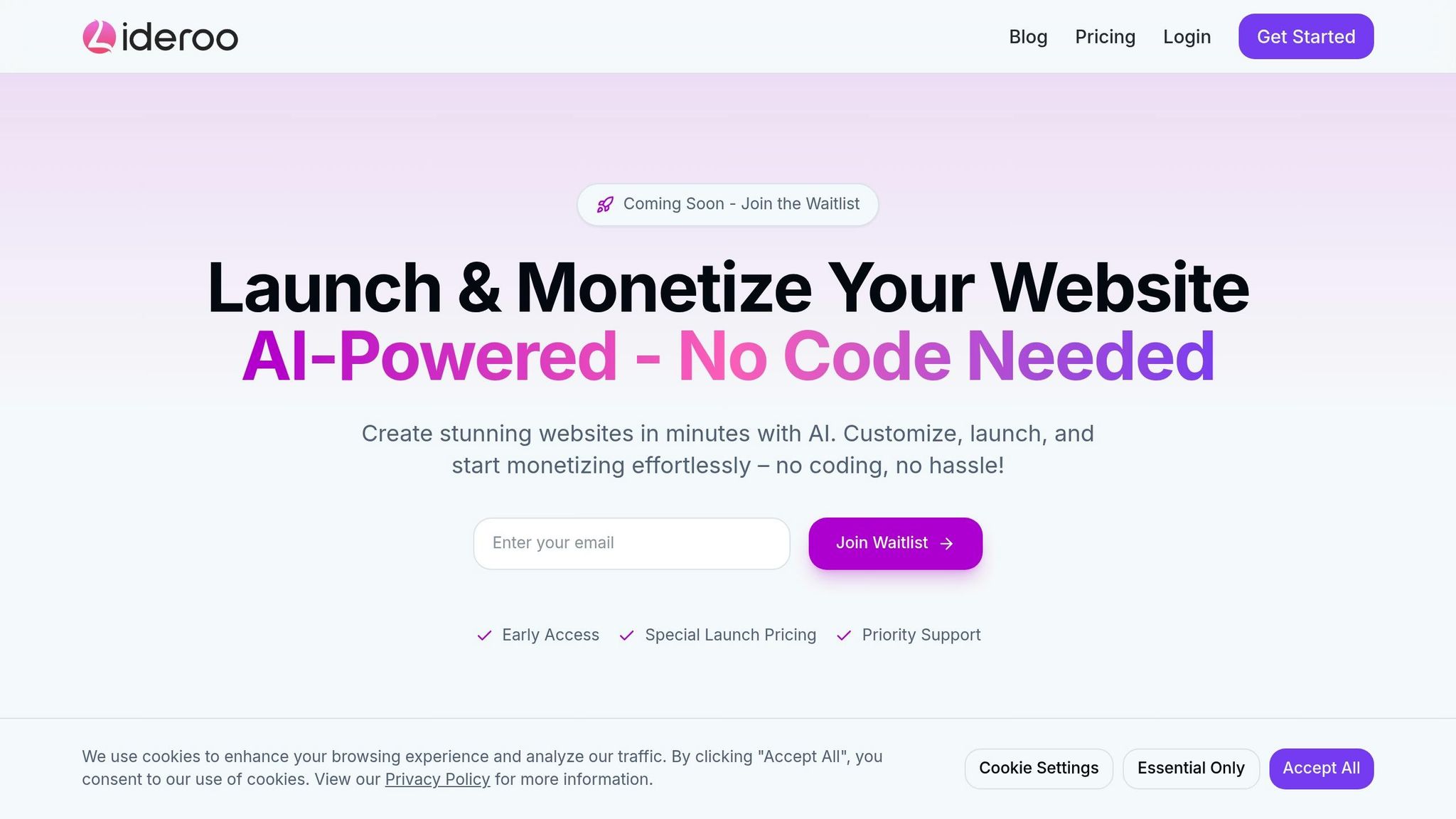
Lideroo offers tools designed to help you create a directory site that stands out and meets your specific needs.
Directory Templates
Start with Lideroo's templates tailored for the U.S., featuring zip code search and mile radius filtering. These templates are pre-configured with U.S. standards for addresses, contact details, business hours, and payment methods.
Pro Tip: Choose templates that align with your niche. For instance, if you're creating a restaurant directory, opt for templates that include features like reservation systems and menu displays.
Once you've selected your template, you can use Lideroo's AI tools to customize your site further.
AI Tool Setup
Lideroo's AI tools are designed to generate content in American English. Adjust these settings to fit your goals:
| AI Feature | Purpose | Recommended Settings |
|---|---|---|
| Content Generation | Writes listing descriptions | U.S. English, focus on local SEO |
| Meta Tag Creation | Optimizes for search engines | Use location-specific keywords |
| Schema Markup | Boosts search visibility | Include business-type specific data |
After setting up the AI tools, you’ll be ready to track your directory’s performance effectively.
Performance Tracking
Lideroo's analytics dashboard makes it easy to monitor your directory’s performance with metrics formatted for U.S. standards. Key features include:
Daily visitor counts displayed with commas (e.g., 1,000)
Revenue tracking in USD ($)
Breakdown of geographic traffic by U.S. states
Peak usage times based on local time zones
Metrics to keep an eye on:
Engagement rates for individual listings
Percentage of completed searches
User registration conversion rates
Revenue generated per listing
The platform's tracking tools are designed to align with U.S. business practices. Reports are automatically adjusted to your local time zone, helping you identify peak activity periods and optimize your directory’s performance with ease.
Conclusion
Create a directory that stands out by using AI-driven strategies. Lideroo's AI tools can help you design a platform tailored to your local market's needs.
Start Local, Focus on a Niche
Zero in on a specific niche - like restaurants in Boston or healthcare providers in Miami - to establish local authority quickly. This focused approach, paired with the strategies mentioned earlier, helps attract and retain engaged users.
Use AI to Drive Growth
Lideroo's AI tools can help you:
Create locally relevant content
Offer personalized search results
Keep listings accurate and current
Monitor location-based performance metrics
These tools lay the groundwork for advanced revenue opportunities.
Monetization That Makes Sense
Start by offering free listings to build your directory's user base. Then, as traffic grows, roll out premium options. You can offer tiered packages, such as:
| Listing Type | Features | Ideal For |
|---|---|---|
| Basic | Contact info only | Startups, new businesses |
| Premium | Better visibility, photos, reviews | Established local businesses |
| Featured | Top placement, custom content, analytics | Advertisers with bigger budgets |