

AI websites thrive with subscription models. Why? They turn sporadic sales into steady income, simplify financial planning, and fund continuous improvements. For instance, Adobe’s subscriber base skyrocketed from 1.84 million in 2013 to 22 million by 2020 after switching to subscriptions. AI tools like Netflix’s recommendation engine, which drives 80% of viewer activity, show how ongoing value keeps users engaged.
Key Takeaways:
- Predictable Revenue: Subscriptions create reliable monthly or annual income.
- AI-Driven Value: Features like personalization and automation boost retention.
- Scalability: Tiered pricing and usage-based models serve diverse customer needs.
- Retention Strategies: AI predicts churn and personalizes experiences to reduce cancellations.
Platforms like Lideroo make it easy to implement these models, offering tools for payment processing, user management, and analytics. With the subscription economy projected to reach $1.5 trillion by 2025, AI websites are perfectly positioned to grow.
AI-Powered Subscription Growth
Why Subscription Revenue Works for AI Websites
Subscription-based revenue models offer a solid financial backbone that one-time payment systems simply can't match. By combining steady income with the unique value AI can bring, this approach has become a go-to for website owners looking to establish lasting, scalable businesses in the AI space.
Predictable Income and Cash Flow
One of the biggest perks of subscription revenue is its reliability. Unlike the ups and downs of sporadic sales, subscriptions provide a consistent monthly income stream. This allows businesses to plan ahead, manage cash flow effectively, and confidently invest in areas like server upgrades, AI model enhancements, and new features. For instance, subscription-based companies have grown 3.7 times faster than the S&P 500 over the last decade [9]. This steady revenue flow creates a strong foundation for further AI advancements, which, in turn, add more value for subscribers.
Take Perfect Corp. as an example. Their AI-driven and augmented reality subscription services saw a 15.6% revenue bump in Q2, reaching $14.9 million [5]. This kind of financial consistency isn’t just good for growth; it allows businesses to make strategic decisions - like hiring, expanding into new markets, or upgrading technology - even during uncertain economic times.
AI Features Add Value for Subscribers
AI doesn’t just enhance operations; it transforms subscription plans into dynamic, value-driven services. From automating billing and reducing errors to using predictive analytics to lower churn, AI adds layers of efficiency and personalization. In fact, integrating AI into sales and personalization strategies can boost overall sales revenue by 15% and increase customer lifetime value by as much as 30% [8].
The impact becomes clear through real-world examples. Google’s AI Pro and Ultra plans offer tools like the Gemini app, NotebookLM, and Veo for video generation [6]. Meanwhile, Read AI provides meeting summaries, transcription, and AI-powered search tools [7], saving users time and effort. These features not only improve subscriber retention but also ensure a more predictable revenue stream for AI-driven platforms.
"AI is proving to be a game-changer by addressing several key challenges that subscription businesses face."
– Kiran Mohan, VP, Marketing at Synthesis Systems Inc [2]
What’s more, AI evolves over time - machine learning algorithms become smarter, personalization tools get better at understanding user needs, and new features can be rolled out to existing subscribers. This creates a "snowball effect", where the service becomes increasingly valuable the longer someone stays subscribed.
Operationally, AI also lightens the load with tools like AI-powered customer support, which can handle routine questions. This frees up website owners to focus on creating innovative features while still delivering top-notch service.
The combination of steady, predictable income and the ever-growing value AI brings makes subscription models a smart choice for monetizing AI websites. It’s a strategy that supports long-term growth while keeping customers happy and engaged.
How to Build Subscription Models for AI Websites
Creating a successful subscription model for an AI website takes more than just adding a payment button. It starts with building a system that consistently delivers value while ensuring a seamless experience for both you and your subscribers. With failed payments potentially cutting revenue by 9% [13], having a solid technical setup is non-negotiable.
The challenge lies in balancing customer value with profitability. This involves crafting features that become more appealing over time while ensuring your payment and user management systems can handle growing complexities. Let’s dive into the essential features that make subscription plans effective.
Core Features Every Subscription Plan Needs
Tiered pricing structures are particularly effective for AI platforms. For example, you can offer basic AI functionality in an entry-level plan and reserve advanced features - like custom AI models, advanced analytics, or priority processing - for higher-tier subscribers [4]. This setup allows users to start small and upgrade as they see the value.
Usage-based models introduce flexibility. You could offer a set number of API calls, data processing hours, or AI-generated outputs within each tier [4]. This approach works well for AI tools, where user needs can vary significantly.
Flexible billing cycles cater to different customer preferences. Monthly plans work for users testing your service, while annual plans appeal to those ready to commit - and they can improve your cash flow. Adding quarterly options provides even more flexibility, meeting the needs of users who want a middle ground.
Service-based differentiation helps clarify the value of each tier. For instance, a basic plan might include community support and access to online documentation, while premium tiers could offer priority email support, dedicated account managers, or early access to new AI features [4]. These distinctions can make upgrading a no-brainer for users seeking more tailored solutions.
Don’t overlook the mobile experience. Many users expect to manage their subscriptions on their phones, so your interface should work seamlessly across devices [14]. Features like plan upgrades, usage tracking, and account management should be easy to navigate on smaller screens.
Payment Systems and User Management Setup
Secure payment processing is vital for building trust. With the global digital payments market forecasted to hit $16.6 trillion by 2028 and grow annually by 14.8% [11], security is more important than ever. AI-powered fraud prevention systems, capable of analyzing over 2,500 data points per transaction, can help protect your business and your customers. For instance, Mastercard’s AI-driven fraud prevention system has cut false positives by 50% [11].
Automated billing systems are a must for scaling efficiently. AI can handle invoicing, tax compliance, and payment reconciliation, reducing errors and freeing up your team to focus on growth [1]. As your subscriber base grows, manual management becomes impractical, making automation essential.
Role-based access controls add another layer of security by assigning permissions based on subscription tiers [12]. This feature is particularly critical for B2B AI tools, where different team members may need varying levels of access.
Seamless integrations with existing systems can save you from operational headaches. Your subscription platform should connect effortlessly with tools like CRM, ERP, and accounting software [10]. For example, when a customer upgrades their plan, these integrations should automatically update billing records, access permissions, and support levels without requiring manual input.
Centralized dashboards are invaluable for tracking subscription data. They allow you to monitor costs, usage patterns, and renewal dates [10]. For AI websites, understanding how customers interact with your features can help you identify upsell opportunities and reduce churn.
Finally, streamline the onboarding process with automation. AI can speed up Know Your Customer (KYC) verification, cutting onboarding times by up to 30% [11]. This not only enhances the user experience but also improves early retention - an important factor for long-term success.
Pricing Strategies That Generate Revenue
When it comes to building a steady revenue stream for your AI business, your pricing strategy is just as important as the technology itself. A well-thought-out subscription pricing model can drive consistent revenue, while the wrong choice might leave money on the table. With 35% of SaaS companies using tiered pricing and 38% opting for usage-based models, it’s clear there isn’t a universal solution that works for everyone [15].
The key is to align your pricing with how customers actually use your product. For instance, a content generation tool serves a different purpose than a data analytics platform, so their pricing structures should reflect those differences. Below are some common pricing models and the scenarios where they shine.
4 Pricing Models and When to Use Them
Flat-Rate Pricing
This straightforward approach charges customers the same amount regardless of their usage. While only 12.2% of SaaS companies use flat-rate pricing, it works well for AI tools that provide steady, predictable value [15]. It simplifies billing and makes budgeting easier for customers. If your product delivers consistent benefits without major fluctuations, this could be the way to go.
Usage-Based Pricing
This model is perfect for services with variable consumption, like AWS, which charges based on storage and computing power usage [15]. Customers pay only for what they use, making it an attractive option for businesses with fluctuating needs. However, this approach requires reliable tracking of metrics like API calls or processing hours, and revenue can be harder to predict.
Tiered Pricing
Offering multiple subscription levels with clearly defined features allows you to cater to different customer segments. This flexibility not only improves customer retention but also opens up opportunities for upselling [15]. If your AI tool has distinct feature sets or capabilities, tiered pricing can help you maximize revenue by appealing to a broader audience.
Hybrid Pricing
This combines elements from multiple models to serve a diverse customer base. For instance, many companies offer a free basic version with paid upgrades for advanced features. This approach attracts budget-conscious users while monetizing those who need more robust capabilities [15]. While it’s the most complex to set up, hybrid pricing can deliver the best of both worlds.
Choosing the right model depends on your product’s value delivery. For tools with steady benefits, flat-rate pricing is a good fit. If usage varies widely, consider usage-based pricing. Tiered pricing works well when you can differentiate features, while hybrid pricing offers flexibility for serving a wide range of customers.
U.S. Market Pricing Guidelines
In the U.S., customers expect pricing to be clear, transparent, and displayed in U.S. dollars. Always use the $ symbol and format prices as $49.99 instead of "49.99 USD" for consistency.
Tax regulations vary by state, so it’s crucial to account for sales tax requirements when setting your prices. Decide whether to display prices as tax-inclusive or tax-exclusive and stick with that choice across all pricing materials.
Psychological pricing can also influence buying decisions. For example, $49.99 feels more affordable than $50.00, though business customers often prefer rounded numbers like $50 or $100 for easier accounting.
Billing cycles should align with customer expectations. Monthly billing is common and fits most budgets, while annual plans with discounts (10–20%) can improve cash flow. Quarterly billing offers a middle ground for those who want flexibility without committing to a full year.
For higher-value AI services, consider offering free trials instead of a permanent freemium model. A 14- or 30-day trial lets customers experience the full functionality of your product without ongoing costs, making it easier to convert them into paying subscribers.
Pricing Model Comparison Chart
Here’s a quick breakdown of how each pricing model stacks up:
| Pricing Model | Best For | Revenue Potential | User Appeal | Setup Complexity |
|---|---|---|---|---|
| Flat-Rate | Consistent AI value delivery | Predictable but limited | High (easy budgeting) | Easy setup and billing |
| Usage-Based | Variable consumption patterns | High but unpredictable | Medium (pay-per-use appeal) | Requires robust tracking |
| Tiered | Differentiated service levels | High with upsell potential | High (flexibility) | Moderate setup |
| Hybrid | Diverse customer segments | Very high | Very high (best of both) | Most complex |
SaaS companies using tiered pricing report 44% higher average revenue per user compared to flat-rate models. Flat-rate pricing, on the other hand, tends to lower customer acquisition costs by about 14% [17]. Additionally, tiered pricing can lead to a 27% increase in conversion rates from free trials to paid subscriptions when tailored to customer needs [17].
"The right pricing tiers create natural entry points that meet customers where they are, allowing you to capture market share across different willingness-to-pay thresholds." – Neil Patel, Co-founder of NP Digital [17]
Many successful businesses start with a simple pricing model and refine it over time as they learn more about their customers. For example, one SaaS provider used AI to analyze customer behavior and optimized its subscription tiers, which boosted renewal rates by 10% and improved customer satisfaction [16].
Your pricing strategy should grow alongside your business. Begin with a straightforward approach, gather data on customer usage, and adjust as needed. The goal is not just to attract users but to create a sustainable revenue model that evolves with your product and audience.
sbb-itb-dfa823a
How to Keep Subscribers and Reduce Cancellations
Keeping subscribers engaged is the backbone of any subscription-based business, especially for AI-driven platforms that thrive on predictable revenue. Did you know it can cost up to five times more to acquire a new customer than to retain an existing one? Plus, improving retention by just 10% can increase revenue by 30% [20]. That’s why understanding subscriber behavior and addressing their concerns proactively is so important.
Here’s the thing: subscribers expect more than generic efforts. A whopping 71% of consumers expect personalized interactions, and 76% feel frustrated when they don’t get them [18]. If you’re not personalizing, you’re losing people.
Using AI to Personalize Subscriber Experience
Personalization isn’t just a buzzword - it’s the foundation of subscriber retention. AI can analyze user behavior, purchase history, and engagement patterns to create tailored experiences that keep subscribers hooked.
Take real-time personalization, for example. Netflix saw a 75% increase in engagement by using AI to recommend content [20]. AI-powered platforms can do something similar by customizing dashboards, suggesting features based on usage, or even offering personalized pricing models. It’s all about making the subscriber feel like the service was built just for them.
Then there’s predictive customer support. AI tools like SuperAGI’s chatbots have achieved a 90% success rate in resolving customer issues on the first try. Companies using AI-driven support have reported up to a 25% boost in retention [20]. By solving problems before they become deal-breakers, AI ensures subscribers stick around.
Starbucks is another great example. They used mobile apps and loyalty programs to deliver tailored promotions and discounts, which led to a 25% jump in customer retention and a boost in sales [20]. Similarly, AI-powered behavioral trigger campaigns - based on data like browsing habits, purchase history, and even social media activity - can build loyalty. Some businesses have seen retention rates climb by as much as 30% using these techniques [20].
Identifying and Preventing Subscription Cancellations
Traditional retention strategies often look backward, focusing on past behaviors. AI flips the script by predicting what’s next. For instance, AI-powered personalization helped OPPO cut churn by 25%, while predictive analytics reduced churn by 40% at SuperAGI [20].
AI can spot early warning signs of potential cancellations, such as declining usage, reduced engagement with key features, a rise in support tickets, or even negative sentiment in communications. By catching these signals in real time, companies can act before a subscriber decides to leave.
The solution? Proactive, tailored interventions. If a subscriber isn’t using a key feature, AI could trigger a personalized tutorial or demo. If price sensitivity is detected, offering a temporary discount or alternative plan might do the trick. Even smart cancellation flows - like offering a lower-priced plan or extended onboarding - can win back subscribers who are on the fence.
Timing is everything. AI can identify the best moments to re-engage, whether it’s during peak usage or right after a positive interaction. That way, retention efforts feel timely and relevant.
"AI takes retention from reactive to proactive. By anticipating churn and tailoring each interaction as it happens, it helps brands keep more customers, longer - with less manual work." - Craig Dennis [19]
And don’t forget about post-cancellation recovery. A well-designed reactivation dashboard can showcase new features or exclusive comeback offers. AI can even pinpoint which former subscribers are worth re-engaging based on their past behavior and lifetime value.
The best retention strategies combine the efficiency of AI with the empathy of human touchpoints. AI handles the heavy lifting - data analysis, predictions, and initial outreach - while human intervention seals the deal with high-value subscribers. Together, these AI-driven strategies seamlessly align with the subscription tools discussed in the next section.
Setting Up Subscriptions with Lideroo
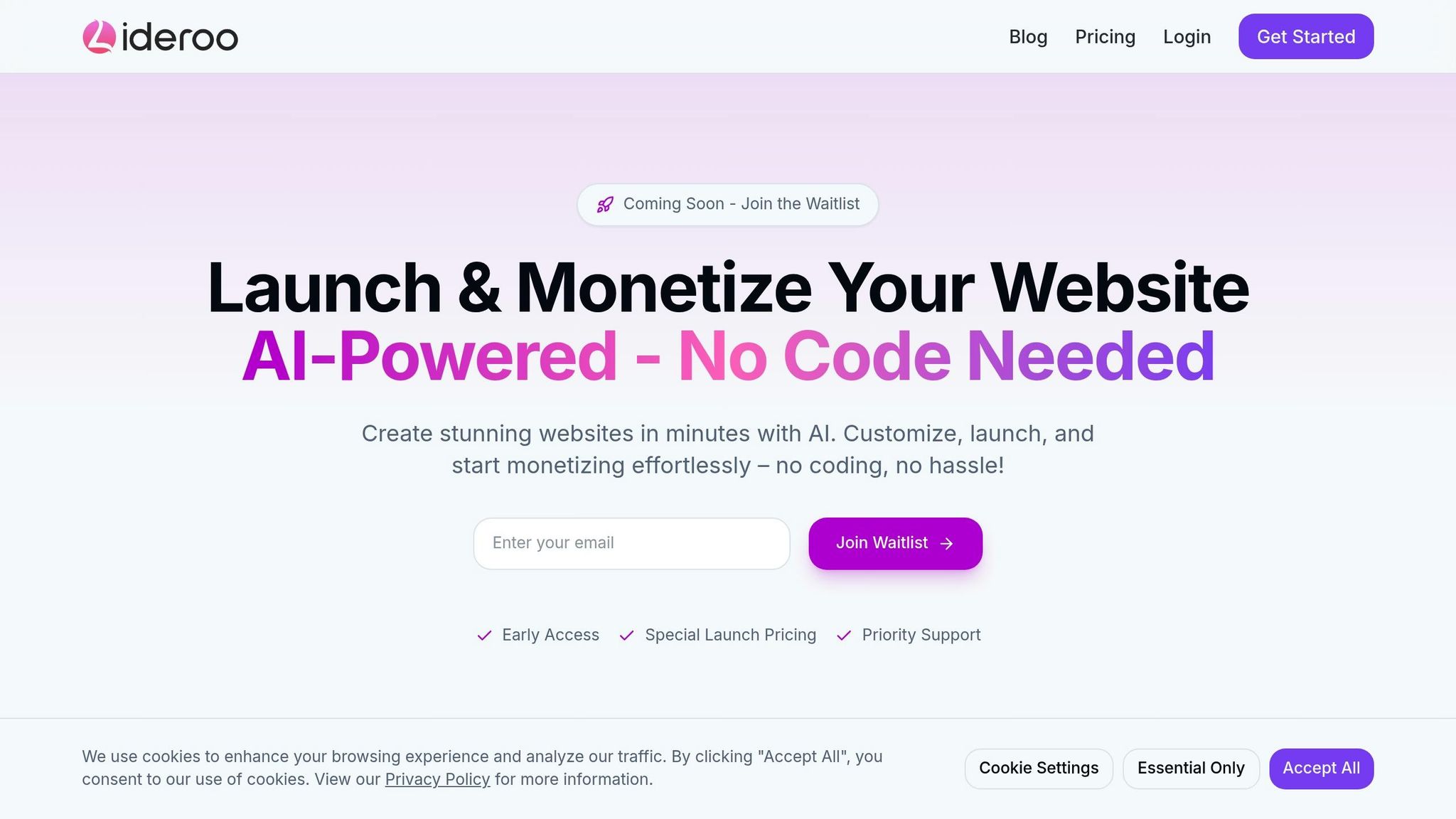
Lideroo makes setting up and managing subscriptions a breeze, thanks to its streamlined approach. Forget about complicated coding or challenging integrations - this platform takes care of the technical side so you can focus on delivering what matters most: value to your subscribers.
Subscription and Payment Features Made Simple
Getting started with subscriptions on Lideroo is straightforward. The platform offers a step-by-step process and a drag-and-drop editor that lets you design subscription pages and member areas with ease. From setting up payment gateways to managing subscriber roles, everything is handled within a single, user-friendly dashboard.
With Lideroo's user management system, you can assign specific access levels to different subscription plans. Whether you're offering free content, premium features, or something in between, role-based access controls ensure the right people see the right content. And the best part? These controls are automated, saving you time and effort.
| Phase | Actions | Lideroo Tools |
|---|---|---|
| Planning | Define content types and access levels | User Management System |
| Technical Setup | Configure website infrastructure | Drag-and-drop Editor |
| Access Control | Set up user roles and permissions | Role-based Access Controls |
| Payment Systems | Configure payment gateways | Built-in Payment Processing |
| User Experience | Optimize navigation and engagement | Analytics Dashboard |
Lideroo’s built-in payment system ensures smooth transactions by handling retries and managing failed payments - important since about 7% of payments fail on the first attempt [22]. These tools are designed to grow with your business, effortlessly supporting an expanding subscriber base.
Creating subscriber tiers is also simple. For example, you can establish levels like "Observer" for previews, "Editor" for full access, and "Approver" for exclusive premium features. Each tier comes with its own permissions and content access, all managed automatically by the platform.
Boosting Subscription Growth with AI
Lideroo’s AI features take your subscription business to the next level. The platform can generate personalized content tailored to different subscriber segments, ensuring high engagement across all tiers.
The analytics dashboard tracks key metrics like Customer Lifetime Value (LTV) and churn [21], giving you actionable insights to stay on course. Plus, AI tools analyze subscriber behavior to suggest content, fine-tune user experiences, and even launch retention campaigns when engagement starts to dip. These proactive measures help you address potential cancellations before they happen.
With the subscription economy projected to hit $2.3 trillion by 2028 - and subscription businesses growing five times faster than traditional retail models [21] - Lideroo equips you to stay competitive. You can experiment with A/B testing for pricing tiers, trial periods, and new features. The platform’s AI evaluates the results and offers recommendations to improve both subscriber acquisition and retention.
As your business scales, Lideroo scales with you. Whether it’s handling increased traffic or managing a larger subscriber base, the platform’s advanced features eliminate the need for a dedicated tech team. This allows you to focus on what you do best: delivering value to your subscribers, while Lideroo takes care of the rest.
Conclusion: Maximizing Revenue with AI Website Subscriptions
The strategies discussed earlier highlight how subscription models can redefine revenue generation for AI-driven websites.
Subscription models have proven to be a powerful engine for growth. Between 2011 and 2020, businesses using these models grew 435%, outpacing S&P 500 companies by 4.6 times. By 2025, the subscription economy is expected to hit an impressive $1.5 trillion[3]. This predictable income stream not only supports reinvestment in AI advancements but also fosters long-term customer loyalty[4].
Key tactics like tiered pricing allow businesses to serve diverse customer needs, while AI-driven personalization helps reduce churn. Tracking metrics such as Monthly Recurring Revenue (MRR) and Annual Recurring Revenue (ARR) ensures businesses can identify and address potential issues early on[3].
Customer retention remains at the heart of profitability. AI tools can analyze subscriber behavior, recommend personalized content, and pinpoint customers at risk of leaving. This creates a cycle of value: satisfied subscribers stay longer, which fuels further product improvements that attract even more customers[23][3]. These insights reinforce the earlier discussion on using AI to enhance subscriber engagement and retention.
Platforms like Lideroo make it easier to implement these strategies by managing the technical aspects, freeing you to focus on delivering value to your subscribers. As the subscription economy continues to reshape industries, AI-powered websites are uniquely positioned to thrive. By adopting these approaches, you can build a scalable and sustainable revenue model.
FAQs
Why are subscription models more effective for AI-driven websites than one-time payment systems?
Subscription models give AI-powered websites a steady and recurring income, offering financial consistency and predictability. Instead of relying on one-time payments, these models enable websites to deliver ongoing value through updates, personalized features, and continuous support - all of which help strengthen customer loyalty over time.
AI takes this a step further by personalizing the subscription experience. From tailored content and recommendations to customized engagement strategies, AI ensures users feel valued and catered to. This level of personalization not only boosts user satisfaction but also increases the overall value customers bring over their subscription period, making this model a smart and scalable option for AI-driven websites.
How does AI improve subscriber engagement and retention in subscription models?
AI is transforming how subscription-based businesses connect with their audience, especially when it comes to engagement and retention. By analyzing user behavior with advanced algorithms, AI delivers personalized content recommendations that feel tailor-made for each subscriber. This level of customization not only enhances the user experience but also keeps subscribers coming back for more.
AI takes it a step further by identifying patterns that signal when a subscriber might be on the verge of canceling. With this information, businesses can act proactively - offering exclusive deals, personalized incentives, or curated content to re-engage users. These strategies not only reduce churn but also help extend the value of each subscriber over time, making AI a powerful tool for building lasting customer relationships.
What are the best strategies for creating a successful subscription model for an AI-powered website?
To create a thriving subscription model for an AI-powered website, start by embracing dynamic pricing. This approach adjusts pricing based on user behavior and preferences. With AI analyzing customer data, you can offer personalized pricing tiers that not only enhance revenue but also keep users satisfied by catering to their specific needs.
Another key element is predicting churn. AI insights can identify users who might be on the verge of canceling their subscriptions. By reaching out with tailored incentives or exclusive content, you can re-engage these users and improve retention rates. Usage-based or value-driven pricing models can also be effective, ensuring subscribers feel like they’re getting their money’s worth.
Finally, make the entire process seamless with automated billing systems. These systems minimize errors and create a smoother experience for users, which leads to higher retention and better long-term profitability. Tools like Lideroo simplify this process with built-in features for subscription management and monetization, making it easier to implement these strategies effectively.