
E-commerce businesses no longer need expensive developers or technical teams to implement advanced AI features. No-code AI platforms like Lideroo allow anyone to integrate tools like chatbots, personalized recommendations, and automated campaigns with simple drag-and-drop interfaces. These tools help businesses:
- Increase sales with smarter product suggestions and dynamic pricing.
- Improve customer experience through personalized shopping journeys and AI-powered chatbots.
- Save time by automating repetitive tasks like email marketing, inventory updates, and analytics.
- Compete effectively by offering enterprise-level features at a fraction of the cost.
What No-Code AI Means for E-Commerce
What Is No-Code AI?
No-code AI platforms make it possible to create artificial intelligence solutions without writing a single line of code. Instead, they rely on visual tools like drag-and-drop interfaces, making AI accessible to business owners and teams who don’t have a technical background [1][2]. Essentially, these platforms let you build AI-powered features without hiring costly developers.
Most no-code AI platforms come with pre-trained models, reusable components, and simple workflows that break down complex AI processes into manageable steps [1][2]. Think of it like using a smartphone app - you get powerful results without needing to understand the intricate technology behind it.
That said, success with no-code AI isn’t just about using the platform. It also requires smart planning, effective data management, and ongoing refinement [1]. Experts often refer to the "70/30 rule" here: 70% of your effort should go into strategy and optimization, while only 30% is focused on setting up the platform [1]. In short, while these tools simplify the tech side, thoughtful business planning is still key.
This user-friendly approach is what powers platforms like Lideroo, which makes it easier for e-commerce businesses to incorporate AI into their operations.
Key Features of No-Code Platforms Like Lideroo
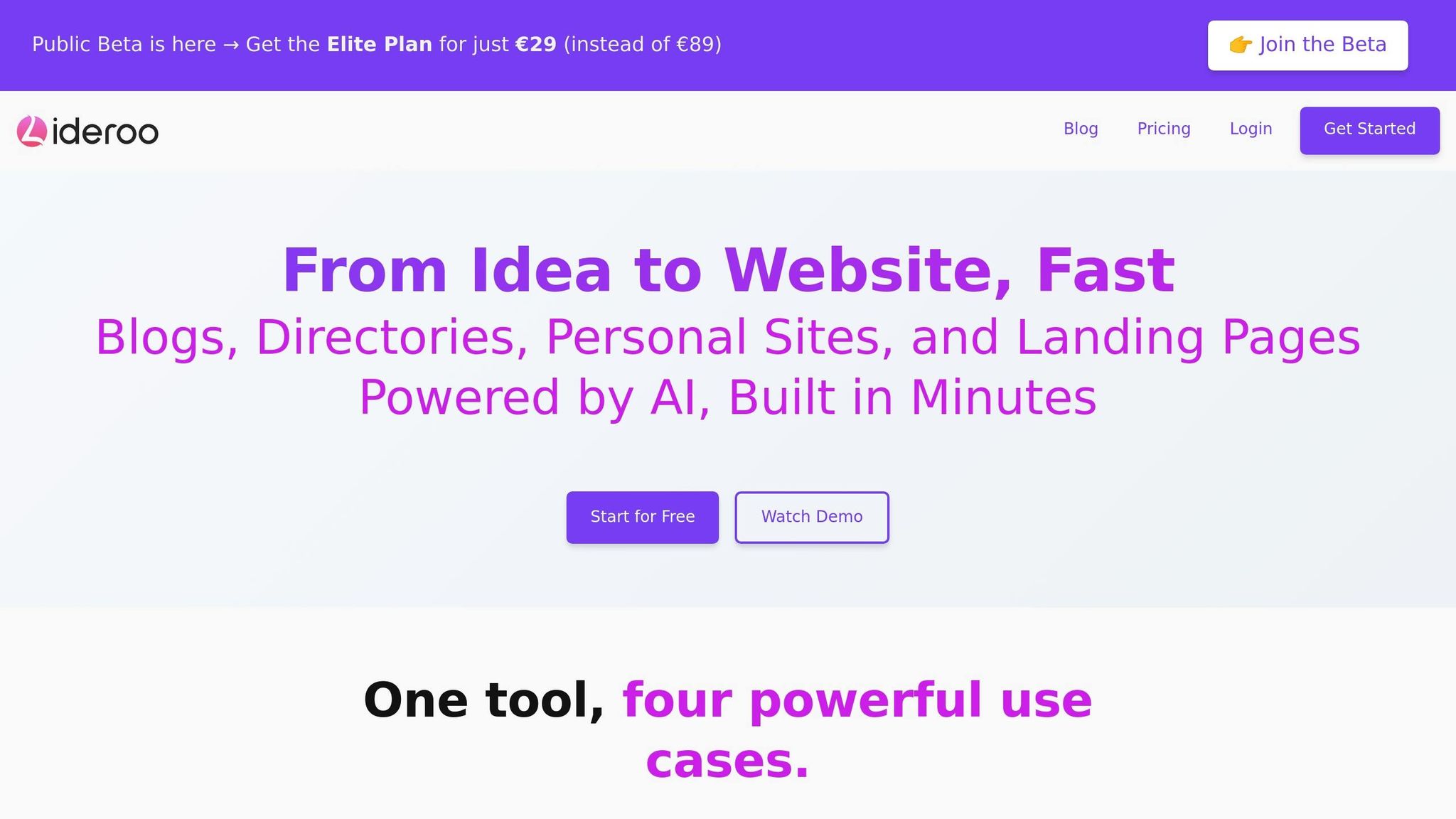
Lideroo is a great example of how no-code AI can transform e-commerce. It combines AI-driven content creation with an intuitive drag-and-drop editor, allowing users to generate product descriptions, marketing copy, and website content automatically - no technical expertise required.
The platform also automates SEO, ensuring your site is optimized for search engines without the need for specialized knowledge. On top of that, its AI can analyze your content and suggest tweaks to improve search rankings.
For revenue generation, Lideroo offers built-in monetization tools like premium content, subscription options, and integrated payment systems. This eliminates the need for multiple third-party apps, streamlining your tech stack.
Another standout feature is its advanced analytics. Lideroo tracks customer behavior, helping you identify top-performing products and the best times to convert visitors into buyers. The AI even uses this data to recommend pricing strategies and inventory adjustments, giving you insights that can directly impact your bottom line.
These features make no-code AI platforms like Lideroo a powerful resource for entrepreneurs looking to simplify their operations while maximizing results.
Why Small Businesses and Entrepreneurs Benefit
For small businesses, no-code AI is a game-changer. It removes the need for specialized teams and instead offers easy-to-use, drag-and-drop interfaces. This means small businesses can now access advanced features that were once only available to large enterprises.
Take customer service, for example. AI chatbots built on no-code platforms can handle up to 80% of routine customer inquiries [1], giving you more time to focus on growing your business.
The financial benefits are equally striking. Around 35% of Amazon’s revenue comes from product recommendations [1], and businesses that use recommendation systems typically see a 10–30% increase in average order value [1]. With no-code AI, even small businesses can tap into these powerful tools.
However, there’s one major hurdle: data quality. A whopping 60% of AI projects fail because of poor data, not because the platform itself is flawed [1]. This highlights the importance of organizing your customer and product data effectively. Once that’s in place, the platform can handle the heavy lifting, running the algorithms and delivering insights.
No-code AI platforms are leveling the playing field, making advanced technology accessible and practical for businesses of all sizes. For small businesses, this means turning challenges into opportunities and competing in ways that were once unimaginable.
Top 5 BEST AI Ecommerce Website Builders 2025 | No Coding Needed!
Better User Experience with AI-Driven Features
Creating a standout user experience is what turns casual visitors into loyal customers. With no-code AI tools, e-commerce platforms can now offer personalized and seamless shopping experiences that feel natural and engaging. When shoppers feel seen and supported, they’re more likely to make purchases - and come back for more.
Personalizing the Shopping Experience
Personalization is a game-changer when it comes to turning interest into sales. Modern no-code platforms analyze everything from browsing habits to purchase history and even time spent on specific product pages to craft tailored shopping experiences.
Dynamic product recommendations adjust in real-time based on user behavior. For instance, if a shopper spends extra time looking at running shoes, the AI might suggest complementary items like athletic wear, accessories, or even fitness-related content. It’s like having a personal shopping assistant guiding the customer.
Smart landing pages adapt their content depending on how users arrive at the site. Someone clicking on a social media ad for winter coats will see different featured items than someone searching for "summer dresses." This approach ensures the shopping experience feels relevant from the very first click.
Platforms like Lideroo make these capabilities accessible through simple, visual tools that don’t require coding expertise. The AI learns from customer interactions and adjusts product displays, banners, and even page layouts to suit individual preferences.
- Content personalization goes beyond product suggestions. AI can tweak product descriptions, blog posts, and marketing messages to resonate with different customer segments. For example, it might emphasize durability for practical buyers while focusing on aesthetics for fashion-conscious shoppers.
Real-Time Assistance with AI-Powered Chatbots
Cart abandonment is one of the biggest hurdles in e-commerce, but AI-powered chatbots are proving to be a powerful tool for addressing this issue. These chatbots provide timely, effective assistance that keeps customers engaged.
Proactive engagement is key. If a customer adds items to their cart but starts browsing elsewhere, the chatbot can step in with helpful suggestions - like answering questions about sizing or highlighting similar products at different price points. The goal is to assist at just the right moment without feeling pushy.
Instant problem-solving eliminates common roadblocks. Whether it’s a question about shipping fees, return policies, or product compatibility, AI chatbots provide immediate answers, saving customers from digging through FAQ pages or waiting for email responses.
Multilingual support is built-in, thanks to AI translation tools. A Spanish-speaking customer, for instance, can receive assistance in their preferred language, broadening your reach without the need for multilingual staff.
These chatbots don’t just respond - they learn. Over time, they get better at understanding customer needs and providing relevant solutions. For complex issues, they can seamlessly transfer the conversation to a human representative while retaining all the context, ensuring a smooth handoff.
Alongside personalized assistance, smarter navigation plays a big role in creating a hassle-free shopping experience.
Streamlining Navigation and Updates
AI-driven automation also works behind the scenes to keep e-commerce sites running smoothly, ensuring a polished and professional user experience.
Automated inventory updates prevent the frustration of customers trying to purchase out-of-stock items. When inventory runs low, the AI can promote alternatives or adjust search results to highlight available options, keeping the shopping flow uninterrupted.
Smart search functionality understands intent, even when search terms aren’t precise. For example, searching for "warm winter jacket" might pull up parkas, coats, and other outerwear, with results ranked by seasonal relevance and browsing history.
Performance optimization happens continuously. AI monitors things like page load times and automatically adjusts elements like image compression or content delivery to keep everything running fast and smooth. Slow-loading pages? Not an issue.
Mobile responsiveness is another win. AI detects the device type and tweaks layouts, button sizes, and navigation menus to ensure a seamless experience, whether customers are shopping on a phone, tablet, or desktop.
No-code platforms handle all of these updates automatically, allowing business owners to focus on bigger-picture strategies instead of technical details. The result? A shopping experience that feels effortless, keeps customers engaged, and drives more conversions.
Automating Marketing and Sales with No-Code AI
While personalized experiences draw buyers in, the true magic lies in what happens behind the scenes. AI-powered automation takes over repetitive tasks, freeing up business owners to focus on big-picture strategies. The real strength of these systems comes from their ability to work together - analyzing customer data, launching targeted campaigns, and nurturing relationships with minimal effort. By building on improved customer experiences, automation transforms both marketing and sales, streamlining workflows and boosting efficiency.
Personalized, AI-Driven Marketing Campaigns
Modern marketing automation has moved far beyond sending generic emails. Today’s no-code platforms create campaigns tailored to individual customer behaviors, past purchases, and engagement patterns.
Email automation: AI analyzes customer actions in real time to deliver personalized messages. For example, if someone abandons their cart, they might receive an email offering a discount. Meanwhile, loyal customers could get early access to exclusive products or services.
Dynamic content personalization: Marketing materials adapt based on customer preferences. A single campaign might emphasize cost savings for budget-conscious shoppers while highlighting premium features for those who value luxury.
Social media management: AI simplifies scheduling and content optimization. It identifies when your audience is most active and posts at the best times, even suggesting hashtags to boost engagement.
Platforms like Lideroo make these tools accessible by integrating them into their website builders. This allows e-commerce businesses to manage their entire digital presence from one dashboard. The AI learns from customer interactions and uses that data to refine campaigns across multiple channels.
One standout example is behavioral trigger campaigns. Imagine a customer browsing winter coats without making a purchase. The system could automatically enroll them in an email series featuring styling tips, seasonal trends, and reviews for similar products. These capabilities don’t just enhance marketing - they also set the stage for smoother sales processes.
Streamlining Sales Processes
Sales often involve a lot of small, time-consuming tasks that can slow things down and frustrate customers. AI automation eliminates these bottlenecks, making the process faster and more seamless.
Transaction management: AI handles payment processing, updates subscriptions or product access, and sends confirmation emails automatically.
Customer follow-ups: Follow-up messages are tailored based on what the customer purchased. For instance, someone buying a digital subscription might receive tips on how to get the most out of it or suggestions for related features.
Lead qualification: AI analyzes user behavior to identify high-intent visitors. It can prioritize these leads for customer support or trigger personalized offers, ensuring that potential buyers feel valued.
Inventory and product management: For digital goods, AI tracks demand patterns and customer searches, recommending adjustments in pricing or product availability to keep customers happy and maintain steady sales.
Payment processing: Secure and efficient transactions are integrated seamlessly into the system, making the checkout experience smooth and reliable.
Boosting Customer Retention and Repeat Purchases
Keeping your existing customers engaged is often more cost-effective than finding new ones. That’s where AI-powered retention strategies come into play.
Loyalty program automation: AI crafts personalized rewards based on purchase history and preferences. Instead of a generic points system, customers might receive discounts, early access to products, or exclusive content tailored to their interests.
Predictive retention modeling: By monitoring signs like reduced activity or longer gaps between purchases, AI can identify at-risk customers and trigger retention campaigns with timely, relevant offers.
Subscription and recurring purchase optimization: AI handles automatic renewals, sends reminders, and suggests upgrades based on usage patterns, ensuring customers stay engaged without disruption.
Win-back campaigns: For customers who’ve gone quiet, AI analyzes past behavior to send targeted messages or offers at just the right time to encourage a return.
Cross-selling and upselling automation: Instead of pushing unnecessary add-ons, AI identifies opportunities to genuinely enhance a customer’s experience. For example, it might recommend complementary services or advanced features to customers who are already satisfied with their current choices.
sbb-itb-dfa823a
Using Data and AI for Revenue Growth
Transforming raw data into actionable insights is a game-changer for businesses looking to stay ahead. No-code AI platforms make it easy to gather customer data from sources like website visits, purchase history, email interactions, and social media activity. The real advantage lies in how these platforms convert scattered data into clear opportunities for revenue growth - opportunities that business owners can act on immediately. This precision unlocks smarter pricing strategies and more effective testing.
Using AI to Analyze Customer Behavior
AI goes beyond basic demographics, diving deep into micro-behaviors that reveal purchase intent, communication preferences, and lifetime value. This level of detail helps businesses make smarter decisions about where to allocate their marketing budgets.
Customer journey mapping becomes incredibly detailed with the help of AI. It identifies patterns like which product pages drive purchases, how long customers typically browse, and what causes them to abandon their carts. For instance, AI might highlight that customers who watch product videos are more likely to complete a purchase, encouraging businesses to invest in video content.
Refined segmentation is another area where AI shines. It creates highly specific customer groups based on behavior, rather than broad categories like "frequent buyers." For example, one segment might consist of shoppers who only buy during sales, while another includes impulse buyers who respond well to limited-time offers. Each group can then receive tailored messages that align with their shopping habits. Tools like Lideroo make it easy to harness these insights, showing how no-code platforms empower businesses to act on detailed data.
Predictive analytics take things a step further by forecasting customer needs before they’re even expressed. By analyzing past behavior, AI can predict when a customer might be ready to upgrade a subscription, explore a new product category, or need assistance. This allows businesses to proactively offer relevant solutions, whether it’s a timely discount or helpful resources.
Platforms like Lideroo integrate these capabilities directly into their dashboards, offering business owners detailed reports on visitor behavior, conversion trends, and revenue patterns - all without requiring technical know-how.
Dynamic Pricing and Inventory Management
Sticking with static pricing can leave money on the table. AI-powered dynamic pricing adjusts rates based on customer behavior, competition, demand, and seasonal trends, aiming to boost revenue while keeping customers happy.
Demand-based pricing is a prime example. During busy periods, prices may rise slightly, while slower times might trigger discounts to encourage sales. AI learns from past data to fine-tune these adjustments for optimal results.
Personalized pricing strategies take customer loyalty and purchase history into account. For instance, loyal customers might receive exclusive discounts, while first-time visitors see attractive introductory offers. This approach balances profitability with customer retention, avoiding the pitfalls of over-discounting.
Inventory optimization is especially useful for businesses offering digital products or services. AI tracks which items drive the most interest and revenue, recommending adjustments like discontinuing underperforming products, bundling complementary services, or creating new offerings based on demand.
Seasonal and trend analysis helps businesses prepare for predictable changes in customer behavior. AI can suggest the best times to launch new products, run promotions, or scale back resources during slower periods. This proactive planning reduces waste and ensures businesses are ready to capitalize on peak demand.
Once pricing and inventory are optimized, the next logical step is improving conversion rates through smarter testing.
Optimizing Conversion Rates with A/B Testing
Traditional A/B testing can be time-consuming and labor-intensive. AI-powered testing not only automates the process but also enables more complex experiments that would be difficult to manage manually.
AI simplifies test creation by automating setup and running real-time multivariate optimization. It can test combinations of headlines, images, and calls-to-action across web pages, email campaigns, and product descriptions, identifying the most effective variations.
Multivariate testing becomes much more practical with AI. This technology can analyze multiple variables at once, uncovering interactions between page elements that might otherwise go unnoticed. For example, it might reveal that a specific headline works best with certain product images or that pricing formats perform differently depending on a visitor’s location.
Monitoring statistical significance ensures that test results are reliable before implementing changes. AI tracks sample sizes and confidence levels automatically, helping businesses avoid decisions based on incomplete data. This scientific approach leads to long-term improvements rather than short-lived gains.
Thanks to no-code platforms, businesses can integrate these advanced testing tools directly into their websites. Every element of a page becomes an opportunity for optimization, with AI handling the heavy lifting to identify what works best.
Monetization Strategies for E-Commerce Websites
Once you've optimized your conversion rates and improved user experience, the next step is to make the most of every visitor by implementing smart monetization strategies. Leveraging no-code AI platforms can simplify this process, enabling businesses to tap into advanced revenue models without needing technical expertise.
The standout benefit here is adaptability. Modern e-commerce platforms thrive on multiple revenue streams, and AI-powered tools can adjust strategies on the fly based on customer behavior and market trends. These tools also streamline tasks like payment processing and subscription management, making it easier to handle complex monetization models.
Built-In Monetization Tools
Platforms like Lideroo take the hassle out of setting up payment systems and managing subscriptions. Their Full Monetization Suite, available with the Agency plan, offers features like automated payment processing, subscription billing, and premium content gating - all accessible from a single dashboard.
Managing subscriptions becomes a breeze with automated billing cycles, freeing you up to focus on delivering value. Plus, integrated analytics let you monitor key metrics without juggling multiple tools.
For businesses blending e-commerce with exclusive or educational content, premium content monetization is a great option. Gating high-value resources - like in-depth product guides, exclusive tutorials, or early access to launches - behind a paywall can create an additional revenue stream.
Payment processing is another area where these tools shine, supporting various payment options and currencies. This reduces administrative tasks and ensures smoother operations. With Lideroo’s direct integration into their website builder, you can set up intricate revenue models without jumping between platforms or dealing with multiple vendors.
Choosing the Right Monetization Model
Once you’ve got the tools in place, picking the right monetization model becomes much simpler. The best approach depends on your product type, customer base, and overall business goals.
| Monetization Model | Best For | Revenue Predictability | Customer Commitment | Setup Complexity |
|---|---|---|---|---|
| One-Time Purchase | Physical products, software licenses | Low (seasonal fluctuations) | Low (single transaction) | Simple |
| Subscription | Services, digital content, consumables | High (recurring revenue) | High (ongoing relationship) | Moderate |
| Freemium | Software, apps, content platforms | Medium (conversion dependent) | Medium (gradual upgrade path) | Complex |
| Premium Content | Educational offerings, exclusive access | Medium (membership dependent) | Medium (value-based retention) | Moderate |
| Hybrid Model | Complex offerings, multiple product lines | High (diversified streams) | Variable (multiple touchpoints) | Complex |
- One-time purchases are ideal for products or services that deliver immediate value, like physical goods, software licenses, or digital downloads.
- Subscription models work well when you provide ongoing value, whether through regular updates, services, or consumables. This approach offers stable revenue but requires consistent effort to keep customers engaged.
- Freemium models attract users by offering basic features for free, with the option to pay for advanced functionality. This is especially effective for software or content platforms, as it lets users try before they buy.
- Premium content strategies monetize expertise or exclusive access by gating specialized resources, making them a great fit for businesses combining e-commerce with educational or community-driven content.
- Hybrid models combine several approaches, such as offering both one-time purchases and subscriptions. This allows you to cater to a broader range of customer preferences.
Upselling and Cross-Selling with AI Insights
AI has completely changed the game when it comes to upselling and cross-selling, making these strategies more personalized and effective. By analyzing customer purchase history and browsing habits, AI can identify the best opportunities to offer additional products or services.
- Dynamic product recommendations tailor suggestions to individual customer interests, going beyond generic "you might also like" messages. These personalized recommendations improve both the shopping experience and the likelihood of additional purchases.
- Personalized pricing strategies for upsells take customer loyalty into account. For instance, loyal customers might receive exclusive discounts on bundles, while new customers might be offered special introductory deals.
- Automated email sequences can follow up on purchases with targeted offers. For example, if someone buys a basic product, an email might suggest complementary accessories or upgrades at just the right time.
Upselling should always prioritize adding true value rather than coming across as pushy. Similarly, cross-selling uses data on product affinities to suggest logical pairings during checkout or in follow-up campaigns. When done right, this approach not only boosts average order value but also enhances the overall shopping experience for your customers.
Conclusion: Transforming E-Commerce with No-Code AI
No-code AI is reshaping e-commerce by putting advanced tools directly into the hands of entrepreneurs and small businesses - no technical expertise required. What once demanded costly development teams or intricate coding is now streamlined into user-friendly platforms that deliver big results.
With features like personalized shopping experiences, automated marketing campaigns, and streamlined operations - from inventory management to payment processing - no-code AI is revolutionizing how businesses operate. Tasks that used to take months can now be handled in just days, freeing up business owners to focus on their customers and growing their bottom line.
Take Lideroo, for instance. Their Starter plan, priced at $49 per month, offers AI-driven content creation, detailed analytics, and monetization tools. For those managing multiple operations, the Agency plan at $299 per month includes API access and team collaboration tools, showcasing how accessible these advanced capabilities have become.
The real game-changer here is accessibility. Small businesses and solo entrepreneurs can now launch online stores with features like dynamic pricing, automated customer support, and data-driven marketing - tools that were previously reserved for large corporations. This shift closes the gap, allowing smaller players to compete on nearly equal footing with industry giants.
This is more than just a convenience upgrade; it’s a transformation in how commerce operates. Imagine a bakery in Ohio optimizing its online orders with AI or a handmade jewelry maker setting up subscription models with automated billing. These aren't just isolated examples - they're proof of a broader revolution where technology adapts to the needs of businesses, not the other way around.
The future of e-commerce is here, and it's powered by those who embrace these tools now. No-code AI platforms break down technical barriers, simplify complex systems, and make advanced features available to everyone. Start using these tools today and see how they can transform your business.
FAQs
How can no-code AI platforms like Lideroo help small e-commerce businesses thrive against larger competitors?
No-code AI platforms such as Lideroo are leveling the playing field for small e-commerce businesses, giving them access to tools that were once reserved for big companies. These platforms take the complexity out of tasks like automating inventory management, improving customer engagement, and fine-tuning marketing strategies. The result? Businesses save both time and money.
With Lideroo, even those without a tech background can create and customize professional websites with ease. Features like drag-and-drop editing, AI-powered content creation, and built-in monetization options make it simple for small businesses to boost their online presence, deliver a better user experience, and grow their operations - all without hefty upfront costs or the need for specialized expertise.
What challenges do e-commerce businesses face with no-code AI, and how can they address them?
E-commerce businesses face several hurdles when adopting no-code AI. Common challenges include maintaining data quality, tackling privacy concerns, and ensuring seamless integration with existing systems. Additionally, limited customization options and the initial learning curve can complicate the process.
To address these obstacles, businesses should focus on using clean, well-structured data, invest in team training, and opt for platforms that integrate easily with their current systems. Tools that combine user-friendly features like drag-and-drop interfaces with AI-powered automation can simplify the transition and boost overall effectiveness.
How does AI-driven personalization enhance the shopping experience and boost sales in e-commerce?
AI-powered personalization is reshaping the way we shop online. By analyzing customer behavior and preferences, it delivers tailored product recommendations, customized content, and specific offers that feel uniquely relevant. This approach makes the shopping experience more intuitive, engaging, and enjoyable for customers.
When businesses provide suggestions that truly resonate, they not only enhance customer satisfaction but also build loyalty. These personalized touches often lead to higher conversion rates and more repeat purchases, driving both immediate sales and long-term growth for e-commerce brands.