

Schema markup is now indispensable for SEO success in 2025. Websites using structured data experience a 35% boost in click-through rates, and AI-powered search traffic converts 4.4x better than other sources. With AI-driven search tools and generative summaries reshaping how users interact with content, schema markup ensures your website stands out in search results.
Here’s what you need to know:
- Schema markup transforms basic search results into rich snippets (e.g., star ratings, prices, FAQs).
- AI tools simplify schema creation, automating code generation without technical skills.
- Tools like Lideroo, Tool X, and Tool Y offer distinct features for businesses of all sizes:
- Lideroo: Best for beginners and small websites with no-code options.
- Tool X: Ideal for complex setups with extensive customization.
- Tool Y: Scales for large, content-heavy websites with bulk processing.
Key takeaway: AI-powered schema tools make SEO more accessible, but choosing the right one depends on your website's size, goals, and technical needs. Structured data isn't optional - it's your gateway to better visibility and higher conversions.
Schema Markup + AI by Martha van Berkel - State of Search 2023
1. Lideroo
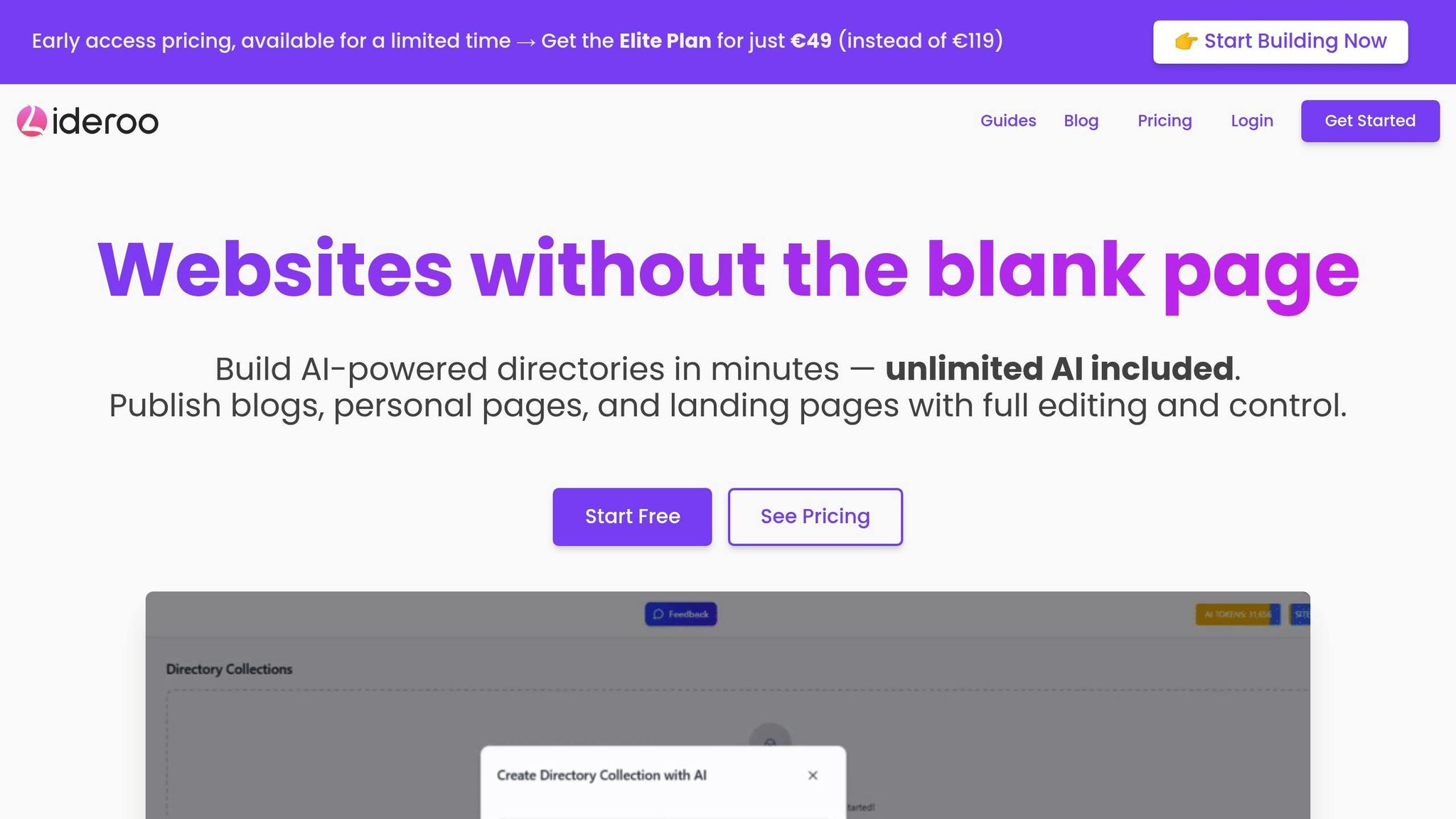
Lideroo is changing the game when it comes to automating schema markup, making advanced SEO tools easy to use - even for those without a technical background.
This platform simplifies the process by embedding structured data directly into its no-code website builder. Instead of relying on manual coding or dealing with plugins, Lideroo’s AI takes care of generating and applying schema markup while you create content. The result? SEO tools that are accessible to everyone.
Schema Automation Features
Lideroo’s AI engine identifies the type of content you’re creating and applies the right schema markup automatically. For instance, if you’re writing a blog post, it recognizes it as an article and applies the Article schema. Working on a directory listing? It’ll use the LocalBusiness schema, complete with business hours, addresses, and contact details formatted appropriately.
The platform supports a variety of schema types, including Article, FAQ, Product, and LocalBusiness, ensuring your content is optimized for rich search results. It also offers batch-processing, which lets you update schema across your entire site or manage multiple content types simultaneously. For multi-author blogs, role-based schema editing ensures consistency, no matter how many contributors are involved.
Integration Options
Lideroo integrates smoothly with popular CMS platforms and third-party tools. You can sync or export schema markup to systems like WordPress and Elementor. Plus, if you prefer full control, you can export static code to host your site on platforms like Netlify, Vercel, or even your own servers. The drag-and-drop editor and pre-built templates make it easy to customize schema markup without worrying about errors.
Localization Support
For US-based websites, Lideroo tailors structured data to meet local standards. It formats currency in USD ($), dates in MM/DD/YYYY, and uses imperial units for measurements. One example? A US-based business directory built with Lideroo saw a 30% increase in rich result appearances and a 25% jump in organic traffic within just three months after implementing automated LocalBusiness and FAQ schema [2]. These localized features allow businesses to grow their visibility while maintaining performance in high-traffic environments.
Scalability and Analytics
Lideroo is built to handle the needs of large-scale websites. Its Elite plan accommodates up to 500,000 visits per month and offers unlimited pages and collections, making it ideal for high-traffic blogs and directories. The platform also includes a built-in analytics dashboard, where you can track key metrics like rich result impressions, click-through rates, and AI citation frequency. These insights help you refine your schema strategies and monitor performance trends with ease.
2. Tool X
Tool X simplifies schema implementation through AI, requiring no coding skills. By analyzing website content, the platform automatically identifies and applies the most relevant schema types. Its targeted features make it a standout choice for schema-driven SEO.
Schema Automation Features
Tool X uses AI to scan your website and determine the best schema types for each page. For example, it applies the Product schema to pages with pricing and customer reviews, adds FAQ schema to FAQ pages, enhances how-to guides with HowTo markup, and optimizes local business pages with LocalBusiness structured data.
Beyond these standard types, Tool X supports Event and Review schemas, ensuring your content is optimized for rich search results across different search features. It also keeps your schema markup up-to-date, automatically refreshing details like pricing or availability as they change [2] [5].
A mid-sized eCommerce company used Tool X to automate Product and Review schema on 5,000 product pages. Within three months, they saw a 28% increase in rich snippet appearances and a 22% jump in organic click-through rates, according to Google Search Console [2].
While Lideroo focuses on building user-friendly websites, Tool X stands out for its real-time schema updates and compatibility with a wide range of CMS platforms.
Integration Options
Tool X integrates effortlessly with popular CMS platforms like WordPress, Shopify, and Wix through plugins and APIs [5]. Once connected, the tool scans your site and applies schema markup automatically. WordPress users will find it works well with page builders like Elementor, making it accessible for businesses of all sizes without requiring technical expertise.
Localization Support
Tool X ensures data is localized to U.S. standards, including address formats, phone numbers, and business hours. This attention to detail improves visibility in location-based searches and ensures AI assistants like Google Assistant and Siri provide accurate information.
Scalability and Analytics
Designed for high-traffic websites, Tool X supports bulk schema deployment and centralized management via its comprehensive dashboard. It can update schema markup across thousands of pages, making it ideal for large-scale implementations. The analytics dashboard tracks key metrics like schema coverage, error rates, and search performance, including rich result appearances, click-through rates, and organic traffic [2] [5]. These insights help businesses fine-tune their structured data strategies and maximize their returns.
sbb-itb-dfa823a
3. Tool Y
Tool Y takes schema markup to the next level with an AI-powered approach that combines automation and scalability. It’s particularly useful for businesses managing large, content-heavy websites, offering features that simplify and streamline schema implementation.
Schema Automation Features
At the core of Tool Y is its AI engine, which scans your content to automatically generate accurate schema markup. It identifies key elements like FAQ sections, product listings, and how-to guides, applying the right schema types - such as FAQPage, Product, or HowTo. For instance, new blog posts are immediately tagged with the Article schema, thanks to its dynamic scanning capabilities.
Tool Y supports a wide range of schema types, including FAQ, HowTo, Product, Article, and LocalBusiness, and regularly updates its schema library to align with the latest Schema.org standards and search engine requirements.
A U.S.-based e-commerce company used Tool Y to optimize schema for over 5,000 product pages. Within three months, they saw a 28% increase in rich result impressions and a 17% rise in click-through rates, as reported in their analytics dashboard and Google Search Console [2].
This level of automation ensures a smooth integration with leading CMS platforms, making schema implementation nearly effortless.
Integration Options
Tool Y’s integration capabilities are designed to be user-friendly and versatile. It offers plug-and-play integrations with popular CMS platforms like WordPress, Shopify, and Wix. Simply install the Tool Y plugin, configure schema settings via its intuitive dashboard, and let the tool handle the rest.
For businesses with custom workflows, Tool Y provides API support, enabling technical teams to embed schema markup directly into their systems. This ensures consistent application of schema across all digital properties, no matter how complex the setup.
Localization Support
Tool Y is tailored for U.S.-based standards, automatically formatting structured data to match local conventions. Dates are displayed in the MM/DD/YYYY format, currency is shown in USD, and imperial measurement units are used. For local businesses, the LocalBusiness schema is customized with accurate U.S. addresses, phone numbers, and operating hours. This enhances visibility in location-based searches and improves compatibility with voice assistants.
Scalability and Analytics
Managing schema markup across thousands of pages is where Tool Y truly shines. Its bulk processing capabilities make it easy to scale, while the analytics dashboard provides insights into schema coverage and performance. You can track which schema types generate the most rich snippets and identify areas that need fine-tuning.
Tool Y also offers real-time monitoring to keep you informed of changes in schema standards. When updates are required, you’ll receive alerts so you can adapt quickly. Integration with Google Search Console adds another layer of insight, showing how structured data impacts search visibility and user engagement.
Pros and Cons
After diving into the detailed analysis of these tools, let’s weigh their strengths and weaknesses. AI-powered schema tools bring a mix of benefits and challenges, depending on your specific needs.
Lideroo stands out for its ease of use and seamless integration. Its no-code approach, combined with AI-driven content generation, makes schema markup accessible to non-technical users. It’s particularly well-suited for directory websites and blogs, thanks to its built-in monetization features and SEO-focused design. However, this narrow focus can be a drawback for businesses needing diverse or highly customized schema implementations.
Tool X is a favorite among technical teams for its high level of customization and control. It’s built to handle complex schema requirements and adapts quickly to updates in schema.org standards. Its advanced validation tools minimize errors that could harm SEO. That said, its steep learning curve makes it less accessible for smaller teams or non-technical users.
Tool Y aims for a middle ground, offering a balance of automation and scalability. Its AI engine is designed to handle large-scale schema implementations, with case studies showing significant gains in rich result visibility for sites with extensive page inventories. Features like real-time monitoring and bulk processing cater to enterprise-level needs, though its complexity might be excessive for simpler projects.
Beyond individual tools, AI-driven schema platforms as a whole offer broader advantages. They open the door for non-technical users to leverage advanced SEO techniques, leveling the playing field against larger companies with dedicated development teams. However, these tools aren’t without challenges. Over-reliance on automation can lead to generic or even incorrect markup if not properly managed. Additionally, some tools may lag behind the latest schema.org updates, missing out on new opportunities. Incorrect implementation of schema data can harm SEO performance more than not using schema at all[4].
| Feature | Lideroo | Tool X | Tool Y |
|---|---|---|---|
| Ease of Use | User-friendly | Requires technical expertise | Moderate learning curve |
| Schema Types Supported | Core types for directories and blogs | Extensive, including custom types | Wide range, regularly updated |
| Automation Level | High with AI content generation | Manual with guided workflows | High with AI scanning |
| Customization | Limited to platform templates | Fully customizable | Moderate customization options |
| Scalability | Best for small to medium sites | Handles complex, large sites | Enterprise-level with bulk processing |
| Integration | Built-in with website builder | API and CMS plugins | CMS plugins and API support |
| Localization | US formats included | Manual configuration needed | Automatic US formatting |
| Pricing | $49–$299/month | Custom enterprise pricing | Subscription-based tiers |
| Best For | Directory sites, blogs, beginners | Complex sites, technical teams | Large-scale implementations |
When choosing a tool, aligning its features with your business needs is critical to maximizing SEO benefits.
Pricing is another important consideration. Lideroo’s straightforward pricing makes budgeting predictable, while Tool X’s custom enterprise pricing can be substantial. However, the investment may pay off for businesses with complex needs, as these tools can drive higher organic traffic and click-through rates. Keep in mind, though, that proper implementation and ongoing maintenance require time and effort[2][3].
Ultimately, the right tool depends on your specific situation. Businesses with simpler schema needs and limited technical resources often thrive with user-friendly platforms like Lideroo. On the other hand, organizations with more complex requirements may find it worthwhile to invest in advanced tools, even if they come with a steeper learning curve.
Conclusion
Choosing the right schema markup tool depends on your business's size and specific technical requirements. In 2025, AI-powered schema markup is playing a pivotal role in shaping SEO strategies.
For small businesses, platforms like Lideroo offer straightforward, no-code solutions with predictable pricing, making them an ideal choice. Agencies, on the other hand, often need tools that support multi-site management and offer advanced reporting dashboards. Meanwhile, enterprises require highly customizable options with API access to handle large-scale implementations.
One thing is evident: AI-driven visitors convert 4.4 times better than those from traditional SEO efforts, making schema markup a must-have for businesses looking to stay competitive [1]. With AI Overviews reducing website clicks by more than 30%, structured data is no longer optional - it’s a key to standing out in evolving search formats [6].
To get the most out of your SEO efforts, prioritize implementing schema for your most valuable content. Use tools like Google’s Rich Results Test to verify your setup, ensure your site is mobile-friendly, and keep your structured data updated in real time for dynamic content.
As seen with Lideroo and similar platforms, aligning your schema strategy with your business goals is essential. Adopting AI-driven schema tools today can help you achieve better search visibility and higher conversion rates.
FAQs
How is AI transforming schema markup for better SEO results in 2025?
AI is transforming schema markup, making it quicker and more precise. With AI-driven tools, websites can now automatically create structured data that helps search engines understand their content more effectively. The result? Improved visibility in search results, increased chances of earning rich snippets, and a stronger overall SEO performance.
Take AI-powered website builders, for instance. These platforms streamline the process by automating schema generation, cutting down on time and minimizing mistakes. As AI keeps advancing, schema markup will grow smarter, adjusting seamlessly to changing SEO trends and evolving user behaviors.
What should businesses look for in an AI-powered schema tool to boost their website's SEO?
When choosing an AI-powered schema tool, it's important to prioritize features that make SEO tasks easier and help boost your online presence. Look for capabilities like automatic meta tag generation, structured data integration, and sitemap creation - these ensure search engines can effectively interpret and rank your content.
You’ll also want a tool that works smoothly with your website builder and offers simple, user-friendly options like no-code customization and AI-driven recommendations. These features not only save you time but also help enhance your site's visibility in search rankings.
How does schema markup help boost my website's traffic and conversions?
Schema markup helps your website shine in search results by giving search engines extra details about your content. This can result in rich snippets - think star ratings, product prices, or event details - that make your site more eye-catching and encourage clicks.
By making your site more visible and presenting users with precise, relevant information, schema markup can boost your click-through rates and bring in more targeted traffic. This, in turn, can lead to higher conversions. Using tools with built-in schema markup features can make the process easier and fine-tune your SEO strategy.