

Real estate directory website templates simplify showcasing properties for sale, rent, or lease. These templates provide tools like property listings, agent profiles, interactive maps, and scheduling features, making it easier for buyers, sellers, and agents to connect.
Key Features:
- Property Listings: Searchable by price, location, and features (e.g., bedrooms, pools).
- Agent Profiles: Highlight expertise, testimonials, and contact info.
- Mobile-Friendly: Optimized for smartphones and tablets.
- AI Tools: Automate property updates, create SEO-friendly content, and analyze leads.
- Lead Generation: Contact forms, interactive maps, and property submission tools.
Why It Matters:
Over 90% of home buyers start their search online, and 51% find their homes there. A professional, user-friendly website boosts credibility, attracts leads, and helps agents stand out.
AI No-Code Platforms vs. Traditional Development:
| Factor | AI No-Code Templates | Traditional Development |
|---|---|---|
| Time to Build | Days to weeks | 3–6 months |
| Cost | Starts at $49/month | $3,000–$30,000+ |
| Customization | Limited but flexible | Unlimited |
| Ease of Use | No coding required | Requires advanced skills |
AI-powered platforms like Lideroo make it easy to create and manage a professional real estate directory without technical expertise. They save time, reduce costs, and streamline workflows, allowing agents to focus on building relationships and closing deals.
Key Features of Real Estate Directory Templates
Flexible Layouts for Property Listings and Agent Profiles
Real estate directory templates come equipped with ready-to-use layouts tailored for showcasing properties and agent profiles. These templates often include advanced search tools, allowing users to filter listings by various criteria - such as property type, price range, square footage, number of bedrooms, location, and even specific features like swimming pools, garages, or proximity to schools. This functionality simplifies the search process for both buyers and sellers.
Agent directories are another standout feature, offering customizable profile pages that highlight key details like professional expertise, recent sales, client testimonials, and contact information. Many templates also integrate seamlessly with MLS (Multiple Listing Service) data, making it easy to manage and display property listings, agent profiles, and market trends all in one place. These tools not only enhance user experience but also help real estate professionals establish a polished, professional online presence.
Mobile-friendly designs are standard, ensuring listings look great and function smoothly on smartphones, tablets, and desktops. With home buyers increasingly relying on mobile devices, having a responsive design is no longer optional - it’s a necessity. These templates often pair with AI-powered tools to further enhance the online property browsing experience.
AI-Powered Content Creation and SEO Features
Building on their dynamic layouts, many templates now include AI tools to boost both content quality and search engine performance. These tools can automatically craft SEO-friendly property descriptions and agent bios by analyzing local market data, comparable properties, and buyer preferences. For instance, AI might emphasize a home’s proximity to top-rated schools for families or highlight walkability scores for city professionals.
AI doesn’t stop at creating content - it also improves local SEO. By identifying search terms that drive conversions, these tools can optimize technical elements like meta tags, XML sitemaps, and schema markup for rich snippets. They can even improve page loading speeds, which can increase conversion rates by up to 7% [1]. Additionally, AI excels at optimizing for voice search, tailoring content to match the natural language buyers often use when searching on mobile devices.
Tools for Lead Generation and Engagement
In addition to offering sleek designs and SEO optimizations, these templates include built-in tools designed to capture leads and engage users. Features like strategically placed contact forms, interactive maps, and front-end property submission options make it easy to connect with potential buyers and sellers.
Interactive maps are particularly useful, offering visual representations of property locations along with nearby amenities like schools, parks, and transit options. These maps not only keep users engaged but also provide critical information that helps them make informed decisions.
Front-end property submission tools are another valuable feature, allowing property owners to list their homes directly through the website. Custom fields can be added to gather specific details - like HOA fees, pet policies, or energy efficiency ratings - that might influence a buyer’s decision.
Integration capabilities take these templates to the next level. Many connect with Google Sheets for streamlined data management, use webhooks to automate workflows, or include Chrome extensions that let users save properties from other sites directly to the directory [2]. Additionally, built-in blogging tools act as lead magnets, attracting visitors with content like local market updates, home-buying tips, and neighborhood guides. This not only boosts traffic but also establishes the site as a trusted resource for potential clients.
How to Customize a Real Estate Directory Template with Lideroo
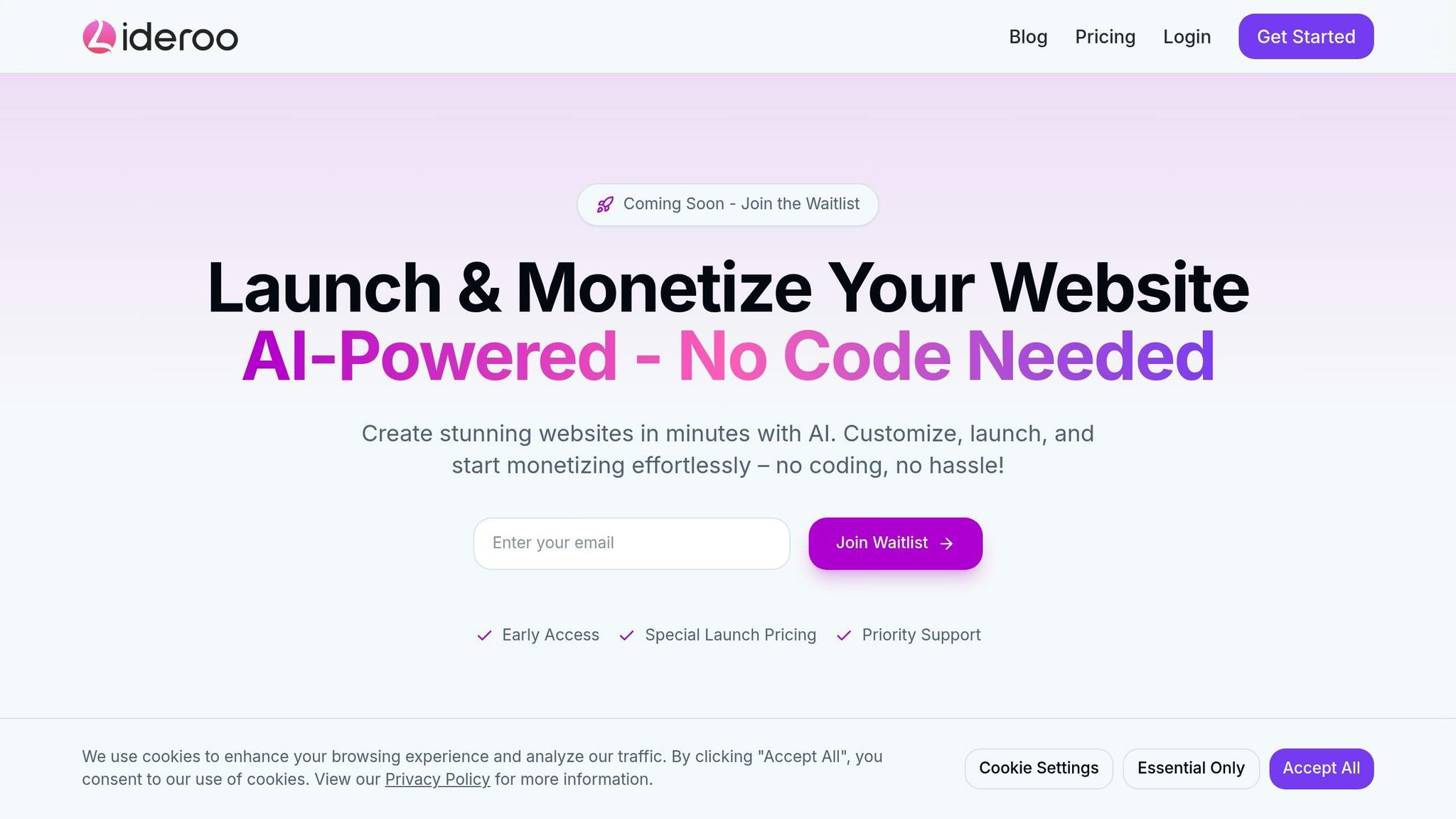
Step-by-Step Guide to Setting Up a Directory Template
Customizing a real estate directory template with Lideroo can take your website to the next level, boosting user engagement and generating valuable leads. Start by selecting a real estate-specific template from Lideroo's collection. These templates come equipped with features like property search filters, agent profiles, and MLS integration.
For a professional look, set up a custom domain through a paid plan. This removes Lideroo's branding and reinforces your own. Activate user-friendly tools like listing submissions and registration forms, allowing property owners and agents to add listings directly through your site. This creates a dynamic, ever-growing directory. Configure the registration process to collect essential contact details, which can be used for lead generation and follow-ups.
Organize your directory with clear, logical categories and ensure the search bar is prominently displayed to meet user expectations [4].
Once the basics are in place, it’s time to focus on enhancing and organizing your property listings.
Adding and Organizing Property Listings
Structure your listings with clear categories, location tags, and custom fields. For example, you could divide listings into Residential Sales, Commercial Properties, and Rentals, with further subdivisions like Single-Family Homes, Condos, and Townhouses under Residential Sales.
Visual appeal is key - use high-resolution images and videos to make a strong first impression [3][4]. Elevate listings with interactive features that provide detailed property information. Add floor plans, charts to showcase layouts, Google Maps for directions, and even walkability widgets to give buyers a sense of the neighborhood. Virtual tours are another great addition; studies show that three out of five homebuyers are open to purchasing a home based solely on a virtual tour [4].
MLS/IDX integration is a game-changer, as it allows listings to auto-sync with your directory. Custom fields can be used to highlight specific property details like HOA fees, pet policies, square footage, and energy efficiency ratings - details that can influence buyer decisions.
To encourage lead generation, consider limiting free property views. Visitors can browse a few listings before being prompted to register, giving them just enough content to spark interest while encouraging sign-ups.
Branding and Monetization Features
With your listings in place, focus on refining your website’s branding and exploring monetization opportunities. Use Lideroo's drag-and-drop editor to customize colors, logos, and layouts, ensuring your site reflects your brand identity.
Turn your directory into a revenue-generating platform with premium listing options. Agents and property owners can pay for enhanced visibility or additional listing details. Subscription plans are another way to monetize, offering tiered pricing models that unlock exclusive features for paying users.
Lideroo’s built-in monetization tools make it easy to manage payments. These tools process transactions securely, provide detailed revenue analytics, and automate billing. Email notifications for payment confirmations add an extra layer of convenience.
Showcase your team to build trust and credibility. Create dedicated pages highlighting agents’ expertise, recent sales, and client testimonials. Including professional headshots, social media links, and detailed bios can help potential clients feel a personal connection.
Finally, strategically place lead capture forms across your directory, especially on high-traffic pages like property detail sections and agent profiles. Lideroo’s AI tools can help you optimize form placement, ensuring your calls to action are effective without being intrusive. This approach keeps visitors engaged and encourages them to take the next step.
Practical Use Cases and Benefits for Real Estate Professionals
Improving Property Showcasing and Agent Directories
Real estate directory templates are a game-changer when it comes to presenting properties and enhancing a brand's image. These professional websites allow agents to highlight properties in a way that grabs the attention of buyers and renters alike.
With features like customizable layouts and interactive maps, visitors can easily filter listings by location, price, and property details. This not only makes the browsing experience smoother but also reinforces the polished, professional image that clients expect.
Agent directories included in these templates are another powerful tool. They allow agents to create detailed profiles featuring professional headshots, sales records, client testimonials, and expertise in specific markets. These profiles build trust and credibility with potential clients. In fact, agents with professional websites see a 40% boost in referral rates compared to those using basic templates [5].
Simplifying Lead Generation and Workflow Management
These templates go beyond showcasing properties - they’re designed to turn visitor interest into qualified leads. Built-in forms make it easy for potential buyers to inquire about listings or reach out to agents directly.
The results speak for themselves: professional websites generate 3-4 times more qualified leads, increasing conversion rates from 2% to 8% [5]. AI tools integrated into these templates take it a step further by automating lead qualification and providing instant responses, even outside regular business hours. Quick follow-ups make a big difference - leads contacted within 5 minutes are 100 times more likely to convert, compared to those left waiting for hours or days [7].
Take Ryan Fitzgerald, owner of Raleigh Realty, as an example. By implementing an automated email sequence tailored to potential clients' inquiries, his team saw a 30% jump in lead conversions within just three months [6].
Additionally, AI can handle scheduling, follow-ups, and document management, reducing errors and freeing up agents to focus on building relationships and closing deals.
Meeting US-Specific Standards and User Preferences
These templates are designed with the American market in mind, ensuring they align with local expectations and standards. For instance, property details are displayed in square footage, prices are shown in US dollars ($), and dates follow the MM/DD/YYYY format. Temperature readings use Fahrenheit, addresses include ZIP codes, and property descriptions feature familiar terms like "master bedroom", "family room", and "HOA fees."
The templates also adapt to regional practices across various US markets. Whether it’s showcasing condos in Miami, ranch homes in Texas, or brownstones in New York, the flexible design accommodates diverse property types and market conditions. By adhering to these standards, agents not only meet client expectations but also build credibility as professionals who understand their local market inside and out.
sbb-itb-dfa823a
How to Create a Real Estate Listing Website (+ Free Template)
AI No-Code Directory Templates vs. Traditional Methods
The way real estate professionals approach website development is undergoing a major transformation. For years, traditional custom development was the go-to option, but AI-driven no-code platforms are quickly reshaping the landscape. By 2025, it's anticipated that 70% of new enterprise apps will rely on low-code or no-code technologies [10]. In addition, the global market for AI-powered website builders is expected to grow from $3.17 billion in 2023 to a staggering $31.5 billion by 2033 [8]. These numbers highlight a shift toward faster, more efficient ways of building websites.
Traditional development often comes with significant challenges, including high costs and lengthy timelines - obstacles that many real estate agents simply can't afford to navigate.
Take BlueKey Realty as an example. They revamped their website in just one month using a no-code platform, compared to the six months initially estimated for traditional development [11]. The result? Lower operational costs, quicker time to market, and an easy-to-manage platform that doesn't require technical expertise.
The financial upside is hard to ignore. Real estate companies using AI solutions have reported over a 10% increase in net operating income and up to a 20% reduction in costs [9][13]. Below is a breakdown of how AI no-code templates stack up against traditional development methods.
Comparison Table: Efficiency and Features
| Factor | AI No-Code Templates | Traditional Development |
|---|---|---|
| Development Time | Very short – websites launch in days/weeks | Long – typically 3–6 months for custom builds |
| Cost | Low to medium – starts around $49/month | High – requires professional teams and ongoing maintenance |
| Technical Expertise | Minimal – no coding required | High – advanced programming required |
| Customization | Limited but flexible with templates/tools | Unlimited – tailored to any requirement |
| Maintenance | Low – handled by the platform | High – needs regular updates by developers |
| Ease of Use | Very high – AI handles most tasks | Low – requires manual coding and effort |
| Scalability | Limited for complex applications | Very high – suitable for any complexity |
For most real estate professionals, the decision is straightforward. They need websites that are functional, visually appealing, and capable of generating leads - not overly complex systems built from scratch.
"A well-developed real estate website with advanced search filters, virtual tours, and integrated CRM capabilities can significantly improve lead generation and help agencies convert more prospects into clients", says the team at Ascendix [12].
AI no-code platforms make this possible by automating time-consuming tasks like coding, debugging, and testing. These platforms come preloaded with features tailored to real estate, such as automatic property listing updates, built-in lead generation forms, and analytics tools that require zero technical know-how.
Perhaps the most empowering aspect is the control these platforms give to real estate professionals. They no longer have to rely on external developers for every update or change. This independence means agents can adapt quickly to market trends, update property listings instantly, and experiment with new marketing strategies - all without waiting on a tech team.
While traditional development still has its place for highly complex, enterprise-level projects requiring unlimited customization, for the majority of real estate agents seeking a cost-effective, efficient, and professional solution, AI no-code directory templates are the clear winner.
Conclusion and Key Takeaways
The real estate industry is evolving rapidly, with Gartner predicting that 70% of new applications will rely on low-code or no-code solutions by 2025 [15]. This shift highlights the growing importance of AI-powered directory templates in shaping the future of real estate.
Why AI-Powered Directory Templates Matter for Real Estate Professionals
AI-powered no-code directory templates bring clear advantages to real estate businesses. Companies adopting these platforms report 33% higher innovation scores compared to those sticking with traditional methods [15]. The financial upside is equally compelling - custom development costs can range from $3,000 to $30,000 or more [14], while subscription-based solutions often start as low as $49 per month.
With these tools, you can launch a fully functional directory in just days instead of months, saving significant time and money. Features like built-in lead generation help turn website visitors into clients, while real-time updates to listings, pricing, and branding keep you in control. Plus, these templates are scalable, meaning they can grow with your business, whether you're a solo agent or running a large brokerage.
These benefits make it easier than ever to take the next step with Lideroo.
How to Build Your Real Estate Directory with Lideroo
Lideroo simplifies the process with its user-friendly drag-and-drop interface and pre-designed real estate templates. Whether your focus is residential, commercial, or rental properties, Lideroo has a template to match your needs.
AI-driven tools streamline tasks like writing property descriptions, optimizing for search engines, and engaging your audience, letting you focus on closing deals. You can also use monetization features - such as premium listings, featured properties, and subscriptions - to turn your directory into a revenue generator. For local visibility, make sure to prominently display your company name, phone number, and contact information on your homepage [14].
With the real estate AI market expected to grow by $1,047 million by 2032 [16], there’s no better time to gain a competitive edge. Lideroo’s robust features, from intuitive templates to advanced API access, give you the tools to create a professional directory that scales with your business and drives profits.
FAQs
How do AI-powered no-code platforms like Lideroo improve real estate directory websites compared to traditional methods?
AI-powered no-code platforms, such as Lideroo, have revolutionized the way real estate directory websites are built and managed. These platforms let you customize layouts, automate repetitive tasks, and integrate advanced features - all without needing any coding expertise. This allows real estate professionals to focus on what truly matters: showcasing properties, managing agent directories, and generating leads effectively.
Unlike traditional development methods, no-code solutions are time-efficient, cost-effective, and incredibly flexible. With tools like these, you can easily adjust your website to reflect market trends, keep property listings current, and create a smooth user experience that draws in and engages potential clients.
What are the main advantages of using mobile-friendly and AI-powered features in real estate directory templates for agents and buyers?
Mobile-friendly features make it easy to navigate and browse property listings on any device, offering a smooth experience for both agents and buyers. This ease of use often translates into greater engagement and higher chances of converting visitors into clients.
AI-powered tools take things a step further by automating routine tasks, offering personalized recommendations, and delivering actionable insights. For agents, this means streamlined workflows and better opportunities to connect with leads. For buyers, it provides a customized and responsive property search experience, simplifying the process and making it far more enjoyable.
How can real estate professionals use directory website templates to generate more leads and grow their client base?
Real estate professionals can make the most of directory website templates by incorporating AI-powered tools to create customized property listings, highlight local market insights, and deliver tailored search experiences. These features not only grab the attention of potential clients but also provide them with information that's directly relevant to their needs.
To boost lead generation, prioritize adding elements like clear call-to-action buttons, intuitive contact forms, and automated follow-up systems. These features make it easy for visitors to connect with you and keep the conversation going. On top of that, optimizing your website for local SEO and maintaining consistent branding can help improve visibility and attract more qualified leads.
By blending these approaches, real estate professionals can simplify their processes, improve the user experience, and expand their client base efficiently.