
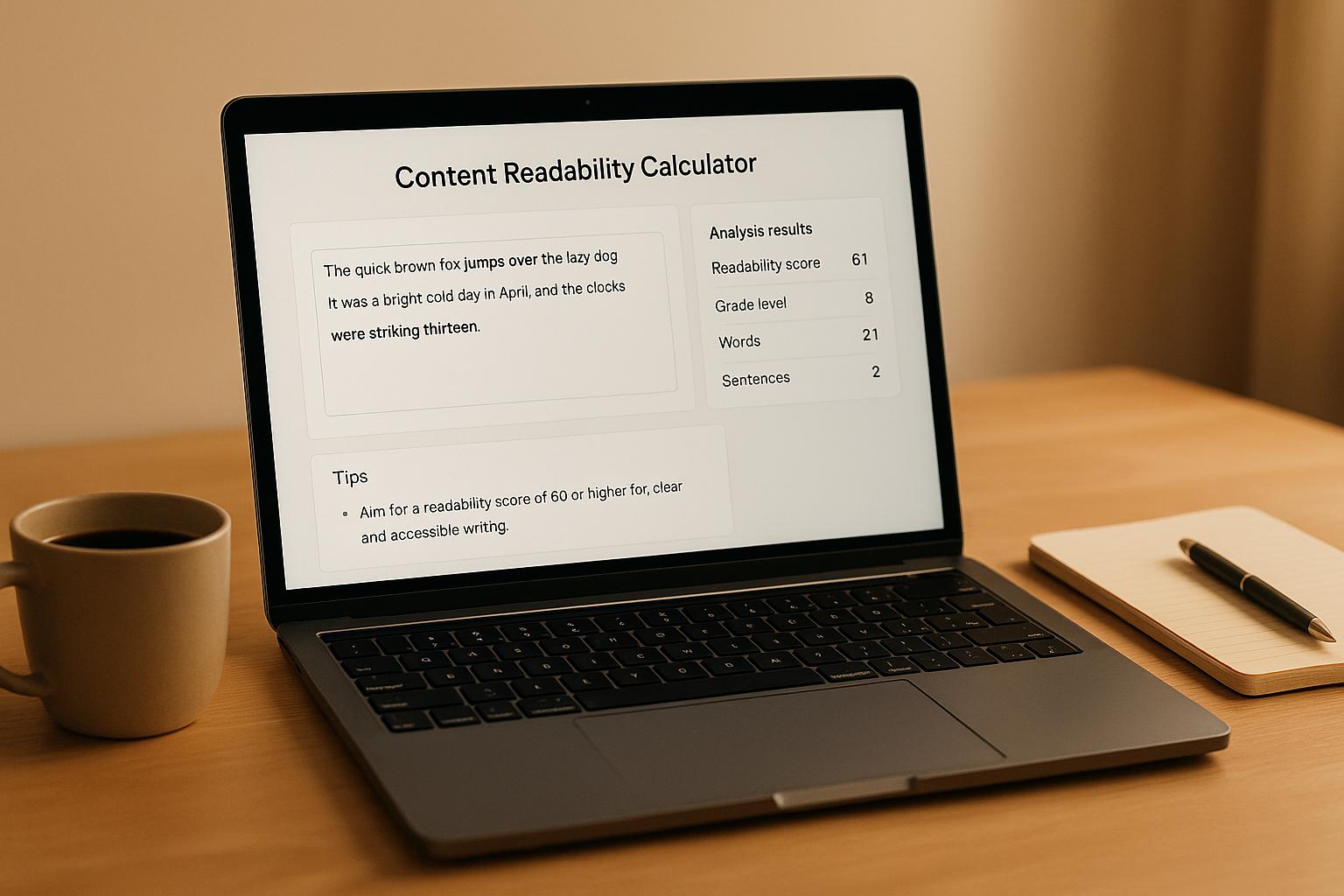
Unlock Better Writing with a Content Readability Calculator
Writing clear, engaging content is tougher than it looks. Whether you're a blogger, marketer, or teacher, ensuring your words connect with your audience is key. That’s where a text difficulty checker comes in handy. This tool evaluates how accessible your writing is, helping you fine-tune it for maximum impact.
Why Readability Matters
Have you ever wondered why some articles feel effortless to read while others make your brain hurt? It often boils down to the complexity of the language. If your sentences are too long or packed with jargon, readers might tune out. A tool that measures reading ease can highlight these issues, offering scores based on trusted metrics. It’s like having an editor who focuses purely on clarity.
Tailor Your Message
Not every piece of writing needs to be simple, but it should match your audience’s needs. A report for experts can afford a higher difficulty level, while a blog for the general public should aim lower. By using a tool to assess your work, you can strike the right balance. Plus, you’ll get tips to refine your style, making your content more approachable without losing its depth.
FAQs
What does a readability score tell me about my writing?
A readability score gives you a sense of how easy or hard your text is for readers to understand. It’s based on factors like sentence length and word complexity. For example, a lower grade level (like Grade 5) means it’s accessible to a wide audience, while a higher score (like Grade 12) suggests it’s better suited for advanced readers. This helps you tweak your writing to match your target audience, whether it’s students, professionals, or casual readers.
Which readability formulas does this tool use?
We rely on well-established metrics like the Flesch-Kincaid Grade Level and the Gunning Fog Index. These formulas look at things like the number of syllables per word and the average sentence length to estimate the education level needed to comprehend your text. They’re widely used in education and publishing, so you can trust the results to reflect real-world readability standards.
How can I improve a poor readability score?
If your score shows the text is too complex, don’t worry—there are simple fixes! Start by breaking long sentences into shorter ones to make ideas easier to follow. Swap out complicated words for everyday alternatives, and avoid jargon unless it’s necessary. Also, try reading your work aloud; if it feels clunky, it probably needs streamlining. Our tool will offer specific suggestions based on your input, so you’ve got a clear starting point.