

Want to create a blog that ranks on search engines in just minutes? AI tools like Lideroo make it possible. Here's how:
- Save Time: AI can generate complete blog posts in minutes, compared to the hours traditional methods take.
- SEO Made Simple: Built-in tools handle meta tags, keywords, sitemaps, and more.
- User-Friendly Design: Drag-and-drop features mean no coding required.
- Scalable Plans: From free options to advanced paid plans, there's a choice for everyone.
- Boost Productivity: Bloggers report doubling traffic and tripling content output using AI.
Quick Comparison
| Feature | AI-Powered Tools (e.g., Lideroo) | Traditional Blogging |
|---|---|---|
| Time Efficiency | Minutes | Hours or Days |
| SEO Optimization | Automated | Manual Effort |
| Cost | Lower | Higher |
| Scalability | Easy | Limited |
AI tools are transforming blogging by automating repetitive tasks, improving SEO, and freeing up time for creativity. With Lideroo, you can launch a professional, optimized blog in no time.
How to Use AI to Write Blog Posts That Rank (Best For SEO!)
Getting Started with Lideroo
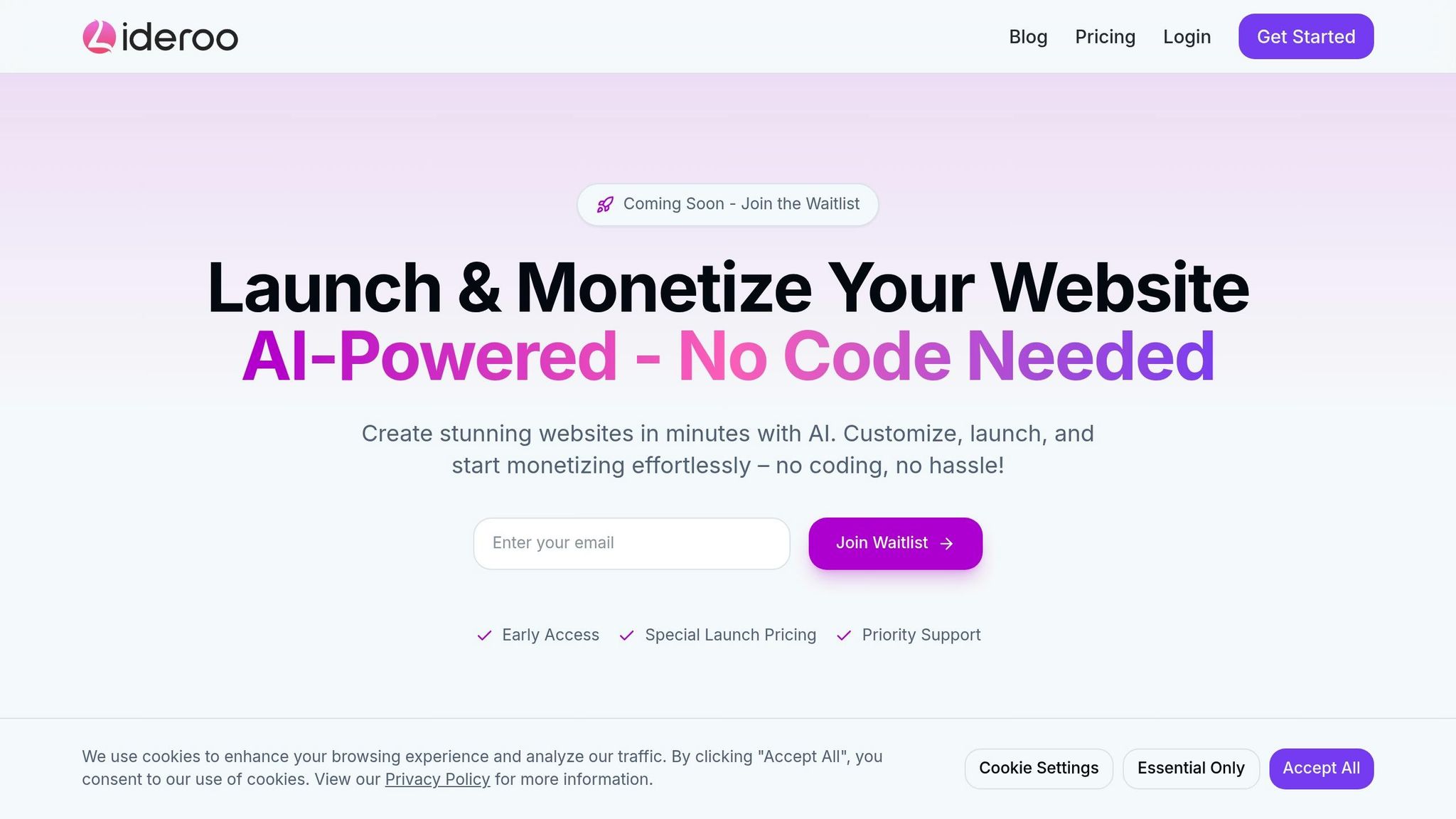
Setting up your AI-powered blog with Lideroo is quick and straightforward. In just a few minutes, you can go from signing up to publishing your first post. Here’s how to get started, choose the right plan, and make the most of Lideroo's tools.
Sign Up and Choose Your Plan
Head to the Lideroo website, click the signup button, and register with your email and a password - it takes less than two minutes.
Once registered, you’ll automatically gain access to the free plan, which includes unlimited pages, basic SEO tools, and AI content generation. This plan does come with Lideroo branding and doesn’t support custom domains, making it ideal for testing the platform and getting familiar with its features.
If you’re ready to take things up a notch, consider upgrading:
- Starter Plan ($49/month): Perfect for individual bloggers, this plan offers custom domains, advanced AI tools, and the ability to manage up to three websites.
- Agency Plan ($299/month): Tailored for businesses, it supports up to 20 websites, provides full API access, and includes team collaboration features - ideal for scaling your blogging operations.
Lideroo’s setup process eliminates the need for juggling multiple services, bringing everything you need for blogging into one seamless platform.
Using the Drag-and-Drop Interface
Once your account is set up, it’s time to design your blog. Lideroo’s drag-and-drop editor makes this process as simple as it gets, combining ease of use with powerful design tools.
Unlike traditional platforms that require coding or complex customization, Lideroo’s visual editor lets you create professional-looking blogs by simply dragging and dropping elements. The editor comes with pre-built templates specifically designed for bloggers. These templates follow SEO best practices, such as proper heading structures, optimized image placement, and mobile-friendly layouts, while still allowing you to customize colors, fonts, and layouts - all without touching a single line of code.
The platform’s integrated AI tools further enhance the experience. As you design, the AI offers suggestions for content improvements, recommends internal links, and even generates meta descriptions to ensure your blog is optimized for search engines right from the start.
On the technical side, Lideroo handles the heavy lifting for you. It automatically configures XML sitemaps, schema markup, and URL structures. It also integrates with Google Analytics and Google Search Console to give you detailed insights. Additionally, the platform improves site performance with built-in caching and a content delivery network, ensuring your pages load quickly - tasks that would otherwise require manual setup [2].
Despite its simplicity, the drag-and-drop editor doesn’t limit advanced users. Features like custom CSS injection, API integrations, and advanced analytics are available for those who want to take their blog to the next level.
Creating SEO-Optimized Blog Content with AI
Craft content that appeals to both readers and search engines with the help of AI. Lideroo's AI-powered tools simplify the process, allowing you to create high-quality, SEO-friendly blog posts in just minutes.
Generate Blog Posts with AI
Getting started with AI-generated blog content using Lideroo is simple. Head to the content creation section and provide a prompt - whether it's something like "10 budget-friendly home improvement tips" or "beginner's guide to cryptocurrency investing."
Lideroo’s AI processes your topic and produces a complete draft, including an engaging introduction, a well-organized body, and a strong conclusion. It automatically integrates relevant keywords based on your topic, giving your content a solid SEO foundation right from the start.
Once the draft is ready, it’s time to make it your own. Edit and personalize the content to align with your brand’s voice and perspective. Think of the AI-generated draft as a starting point - it’s your input that transforms it into something uniquely yours.
After personalizing your draft, focus on structuring it for maximum SEO impact.
Structure Content for SEO
A clear and organized structure not only improves SEO but also keeps readers engaged. Once your draft is ready, arrange it using clear headings and lists to enhance both readability and search engine performance. Lideroo’s AI automatically formats your content with headings, subheadings, bullet points, and lists, making it easier for readers and search engines to navigate [5].
The platform applies a logical hierarchy, using H1 for the main title, H2 for major sections, and H3 for subsections. This structured approach helps search engines understand your content better while guiding readers through your post.
Want to optimize for featured snippets? Use AI to create concise, direct answers to common questions [3]. Lideroo also identifies internal linking opportunities, connecting related content and boosting your SEO while keeping readers exploring your site.
Additionally, Lideroo ensures your content is mobile-friendly by breaking it into shorter paragraphs and adding white space. With mobile optimization being a key ranking factor [5], this feature saves you time and effort.
Once your structure is set, focus on integrating keywords effectively.
Add Keywords Naturally
Keywords are the backbone of SEO, but they need to be used thoughtfully. With your structured draft in place, embed keywords naturally throughout the text. Lideroo’s AI is designed to seamlessly incorporate keywords while maintaining readability and engagement.
The AI strategically places primary and secondary keywords in key areas, such as the title, opening and closing paragraphs, subheadings, meta descriptions, and even image alt text and URLs [7]. It also emphasizes long-tail keywords, which align closely with reader intent and attract highly targeted traffic [7].
To avoid keyword stuffing, Lideroo uses Latent Semantic Indexing (LSI) keywords - related terms and variations that expand the thematic scope of your content [8]. This approach ensures your posts remain relevant without overloading them with repetitive phrases.
At the end of the day, Google values content that is genuinely helpful and high-quality, regardless of whether it’s created by a human or AI [6]. With Lideroo’s AI, you can focus on delivering valuable content that answers your audience’s questions while achieving sustainable SEO success.
sbb-itb-dfa823a
Using Built-In SEO Tools
Lideroo's integrated SEO tools simplify complex tasks, helping you focus on creating great content while boosting your blog's search rankings.
Set Up Meta Tags and Descriptions
Meta tags and descriptions play a big role in shaping your blog's visibility on search engines and attracting clicks. Lideroo's AI takes the guesswork out of this process by generating optimized meta titles and descriptions for every post. These are crafted to meet ideal length guidelines - meta descriptions stay within 150–160 characters, and title tags are kept between 50–60 characters to avoid truncation [10].
Why does this matter? Well, optimized meta descriptions can improve your click-through rates by signaling to search engines - and users - that your page is both relevant and engaging [9]. Lideroo ensures each page gets a unique meta description, naturally includes keywords, uses an active voice, and even adds a call to action for better results.
However, it’s worth noting that Google rewrites 60% to 70% of meta descriptions [10]. As Google advises:
"If you don't have time to create a description for every single page, try to prioritize your content; at the very least, create a description for the critical URLs like your home page and popular pages" [9].
Enable XML Sitemaps and Schema Markup
Behind the scenes, XML sitemaps and schema markup work to make your blog more accessible to search engines. XML sitemaps act like a roadmap, listing all your website's URLs to guide search engine crawlers [12]. Schema markup, on the other hand, adds structured data that helps search engines better understand and display your content [12].
Lideroo handles this automatically. It generates and maintains XML sitemaps that meet Google's requirements: UTF-8 encoding and limits of 50 MB or 50,000 URLs per sitemap [11]. If your blog grows beyond these limits, Lideroo creates additional sitemaps to ensure full coverage. The platform also supports extra sitemap formats to include data like images, videos, and localized content [11].
Schema markup is seamlessly added as you publish content. This includes details like publication dates, author names, and content categories, which help search engines create rich snippets. Lideroo even submits your sitemap to Google Search Console and updates your robots.txt file [11].
Once these technical SEO elements are in place, the next step is to monitor how well they’re working.
Track SEO Performance with Analytics
Tracking your SEO performance is key to refining your content strategy. Metrics like keyword rankings, organic search traffic, conversion rates, competitor insights, and overall site health are essential [13]. Lideroo's analytics dashboard brings all this data together in one place.
For instance, keyword rankings are updated daily, letting you see how your posts perform for target keywords over time. Organic search traffic metrics show how many visitors are finding your blog through search engines, giving you a clear picture of your SEO efforts' impact. Conversion tracking goes a step further by measuring visitor quality and linking SEO directly to business results.
Lideroo's competitor analysis tools help you spot content gaps and find new opportunities to grow. Meanwhile, its site health monitoring acts like an SEO audit, flagging issues like broken links, slow-loading pages, or missing meta descriptions before they can hurt your rankings. All this data is analyzed and reported regularly, giving you actionable insights to improve your blog's search performance [13].
Monetize and Manage Your Blog
You've built a strong SEO foundation, and your blog is now pulling in traffic. What's next? It's time to turn that audience into a source of revenue and ensure your operations run like clockwork. With Lideroo's suite of monetization and management tools, you can earn income while keeping your blog organized and efficient.
Monetization Features
Lideroo provides a range of tools to help you generate revenue from your blog. From offering premium content to setting up subscription plans, the platform makes it easy to capitalize on your audience's engagement with integrated payment processing features.[4]
Here’s how it works: Paid plans unlock advanced tools for monetization. The Starter plan ($49/month) equips you with essential features, while the Agency plan ($299/month) includes everything - like comprehensive subscription management and premium content gates.[4]
Want to offer exclusive content? You can place certain blog posts or resources behind a paywall. This lets readers sample your free material before paying for in-depth guides, exclusive tutorials, or members-only resources. The best part? Payment processing is automated, so you can focus on creating content while the system handles the transactions.
Manage Content and User Roles
As your blog grows, so does the need for efficient management. Lideroo's Role-Based Access Control (RBAC) system helps you delegate tasks, organize workflows, and maintain security. You can assign specific permissions to team members based on their roles, ensuring everyone has access only to what they need.[14]
Whether you're working with guest writers, editors, or social media managers, you can customize access levels to match each person's responsibilities. Pre-set roles and custom permissions make it easy to manage your team effectively. Plus, you can establish workflows and approval processes to ensure a consistent output. Need to make changes on the fly? Regularly monitoring user activity allows you to quickly adjust permissions as roles shift or team members leave.[15]
Track Blog Performance
Tracking your blog’s performance is essential for growth. Just like SEO metrics guide your content strategy, Lideroo's analytics help you optimize your monetization efforts. The platform’s dashboard varies by plan: the Free plan offers basic metrics, while paid plans unlock more detailed insights.[4]
Starting with the Starter plan ($49/month), you’ll gain access to analytics that reveal visitor numbers, user engagement, and conversion rates. These insights help you identify which posts perform best and how readers navigate your site. Engagement metrics allow you to refine your content strategy, while monetization analytics track subscription sign-ups and premium content performance. It’s all about using data to make smarter decisions and grow your blog.[4]
Build and Launch Your AI-Optimized Blog Today
Lideroo's AI-powered tools make it possible to create, refine, and monetize a blog in just minutes. With AI transforming the blogging landscape, you're stepping into a new era of content creation. Here's how to take your final steps toward launching an AI-optimized blog that stands out.
Key Takeaways
Lideroo combines the power of AI with human touch to deliver polished content. The platform generates initial drafts and outlines, which you can refine to match your voice. Research shows that 65.8% of digital marketers find AI-generated content to be on par with or even better than human-created content, making this method both practical and competitive [1].
It also takes care of the technical side of SEO, so you can focus on what matters most - your content. Features like automated XML sitemaps, schema markup, and meta tags are handled seamlessly. Plus, its drag-and-drop interface allows you to concentrate on crafting engaging content while the platform manages the complex SEO work in the background.
For monetization, Lideroo offers flexible options to match your goals. The Starter plan, priced at $49/month, gives you access to advanced analytics, custom domains, and monetization tools. For larger operations, the Agency plan at $299/month unlocks team collaboration features and API access, perfect for businesses scaling up to enterprise-level needs.
Next Steps
Ready to get started? Dive into Lideroo's free plan to explore its features without spending a dime. With access to unlimited pages, basic templates, and AI content generation, you can experiment and get a feel for the platform at no cost.
Start by creating clear, engaging content paired with optimized visuals and descriptive alt text [16].
When you're ready to take your blog to the next level, upgrade to the Starter plan. This unlocks custom domains and removes Lideroo branding, adding a professional touch and boosting your blog's credibility with readers.
With Lideroo, launching an SEO-optimized blog is quick and hassle-free. Your blog could be live and attracting visitors in minutes - what will your first post be?
FAQs
How does Lideroo's AI help create SEO-optimized content that follows best practices?
Lideroo's AI takes the hassle out of SEO by handling key optimization tasks for you. It automatically generates meta tags, creates XML sitemaps, and applies schema markup, all designed to improve your site's visibility on search engines. These features are built right in, so even if you're not tech-savvy, you can produce content that meets SEO standards effortlessly.
On top of that, the AI dives into keyword trends and suggests relevant topics, giving you the tools to create content that not only connects with your audience but also ranks well in search results. By combining automation with data-driven insights, Lideroo helps you produce content that's engaging and search-friendly - all in just a matter of minutes.
What are the main differences between Lideroo's free and paid plans, and how do they affect your blog's functionality and professional look?
Lideroo's free plan is a great starting point for beginners. It offers basic AI content creation tools, essential SEO features, and supports up to 5,000 monthly visits - perfect for those just dipping their toes into blogging.
For those ready to take things to the next level, Lideroo's paid plans deliver more robust options. The Starter Plan ($42.50/month) and Pro Plan ($97/month) come packed with advanced AI writing tools, a full SEO toolkit, and much higher traffic limits - up to 250,000 visits. On top of that, you’ll gain access to features like full monetization options and advanced customization, helping you create a blog that stands out and feels professional.
If you're looking for more control, room to grow, and a polished blog that impresses, upgrading to a paid plan is worth considering.
Can I adjust AI-generated content to reflect my brand's unique voice, and how can I do it effectively?
Yes, AI-generated content can align with your brand’s distinct voice. Start by creating a Brand Voice Guide that outlines your tone, style, and key messaging. Use this guide to craft specific prompts for the AI, like “Write in a warm and approachable tone” or “Adopt a bold and confident style.” These instructions help steer the AI toward producing content that reflects your brand’s personality.
Consistency is key. Whether you're generating blog posts, social media updates, or email campaigns, keep the tone uniform across all platforms. Take time to review and tweak the AI's output regularly, ensuring it stays true to your brand’s evolving identity. A clear and consistent voice not only connects with your audience but also reinforces your brand’s presence.