

AI traffic insights simplify website performance analysis by turning complex data into actionable recommendations. Unlike traditional analytics, these tools use machine learning to uncover patterns, predict user behavior, and suggest improvements without manual effort. Here's what you need to know:
- What It Is: AI traffic insights analyze visitor behavior, traffic sources, and engagement metrics to explain why events happen and what steps to take next.
- Why It Matters: They help identify high-performing content, optimize traffic sources, and improve user engagement - without requiring a dedicated analytics team.
- Key Metrics: Focus on bounce rate, session duration, conversion rates, pages per session, and traffic source quality.
- Best Practices: Use AI insights to optimize content, improve website design, and monitor traffic in real-time.
- Tools: Google Analytics 4, Ahrefs, and Serpstat are popular options, while platforms like Lideroo integrate AI analytics directly into website management.
AI-powered tools like Lideroo streamline the process by combining analytics with optimization features, making it easier for non-technical users to act on insights and improve website performance.
Uncovering AI Insights in Your GA4 Data
Key Metrics for AI Traffic Analysis
Knowing which metrics to track can mean the difference between guessing and making informed decisions that drive growth. AI traffic analysis digs deeper than surface-level stats like page views, uncovering the real story behind the numbers. The focus should be on metrics that lead to meaningful outcomes rather than flashy figures that don't impact your business goals. Here's a breakdown of the most impactful KPIs and segmentation strategies that AI uses to refine traffic insights.
Important KPIs for AI Traffic Insights
Bounce Rate: A high bounce rate often signals a mismatch between user expectations and your content. AI identifies these problem pages and suggests specific improvements to keep visitors engaged.
Session Duration: Longer sessions indicate content that resonates, while shorter ones suggest unmet user needs. AI connects session length with specific pages, helping you understand what keeps your audience interested.
Conversion Rates: Whether it's small actions like newsletter sign-ups or major ones like purchases, conversion rates are key. AI analyzes patterns to streamline the path from interest to action.
Pages Per Session: This metric shows how well users navigate your site. AI highlights the pathways that encourage deeper engagement.
Traffic Source Quality: Not all traffic is equal. AI links referral sources to on-site behavior and conversions, helping you focus on the channels that truly perform.
Traffic Segmentation Strategies
Effective segmentation transforms raw traffic data into actionable insights. AI takes segmentation to the next level by uncovering patterns you might miss.
Device Segmentation: By analyzing how users behave on different devices, AI can identify device-specific issues and opportunities for optimization.
Geographic Segmentation: AI reveals regional trends and preferences, allowing for more precise targeting and even scheduling content to align with local time zones.
Behavioral Segmentation: Grouping users based on their actions - like pages visited or time spent on site - helps predict who is likely to convert or become a long-term customer. AI pinpoints these early engagement signals.
Referral Source Analysis: Each traffic source brings unique user behaviors. AI highlights these differences, enabling you to tailor your content to either educate the audience or drive conversions more effectively.
Best Practices for Using AI Traffic Insights
Turn your website metrics into actionable steps that improve performance. AI traffic insights can guide decisions on content, design, and monitoring. Here's how to translate those numbers into impactful results.
Optimizing Content Based on AI Insights
AI helps you understand what content connects with your audience and what doesn't. High-performing pages often have shared characteristics - like specific topics, ideal content length, or a particular formatting style that keeps readers engaged. When AI identifies these patterns, you can replicate those elements or expand on successful content.
AI also highlights content gaps where users lose interest or fail to find the information they need. For instance, if visitors frequently leave a certain page, it could mean the page is missing critical details or lacks a clear call-to-action. Additionally, AI can uncover seasonal trends, showing when interest in certain topics spikes throughout the year.
Sometimes, underperforming content just needs a refresh. A new headline, additional examples, or improved internal links can revitalize pages that aren't gaining traction. AI insights also enable content personalization, helping you cater to different audience segments. For example, detailed tutorials might appeal to one group, while quick tips resonate with another. Tailor your content to meet these diverse preferences.
Once you've optimized your content, it's time to apply these insights to your website's design.
Improving Website Design for User Behavior
AI traffic insights reveal how visitors truly interact with your site. Tools like AI heat maps show where users click and scroll, helping you identify both effective design elements and areas of confusion.
Navigation adjustments become easier when AI pinpoints common user paths and drop-off points. If visitors struggle to find essential pages like your contact info or pricing, it's a sign your navigation needs reworking. Similarly, if users frequently rely on your search bar for information that should be accessible through menus, it's time to reorganize.
Mobile optimization becomes more precise with AI. For example, desktop users might prefer long-form content, while mobile users lean toward shorter sections with clear headings. AI insights help you create responsive layouts that cater to these preferences.
Page load speed is another critical factor. AI can correlate slow-loading pages with high bounce rates, showing just how much a one-second delay can hurt engagement. Prioritize speeding up the pages most critical to your goals.
Call-to-action (CTA) placement also benefits from AI insights. Instead of guessing where to put signup forms or purchase buttons, rely on data to place them where users naturally pause or engage. This ensures CTAs are positioned for maximum impact.
These design changes work hand in hand with your content strategy to boost engagement and drive conversions.
Real-Time Traffic Monitoring
Real-time monitoring adds another layer of optimization, allowing you to respond quickly to changes. For example, traffic spikes from social media mentions, news coverage, or viral content require immediate action to maximize the surge in interest.
AI can alert you to unusual traffic patterns, enabling you to scale resources or implement temporary fixes to maintain your site's performance. This is especially useful when dealing with sudden increases in bounce rates from specific traffic sources or regions. These alerts help you catch issues like broken links or content that isn't resonating with certain audiences.
Content performance tracking in real time shows which new posts or pages are gaining traction right away. This allows you to amplify successful content or tweak distribution strategies for underperforming pieces.
AI can even provide competitive insights, notifying you of shifts in your industry. While you won't see exact competitor data, AI can detect changes in search rankings or social media engagement that might signal broader market trends.
Automated alerts for key metrics simplify real-time monitoring. Instead of constantly checking dashboards, you can rely on AI to notify you of major changes, freeing up your time to focus on strategy and content creation while staying informed about critical developments.
sbb-itb-dfa823a
Tools to Track and Analyze AI Traffic
Tracking website traffic has always been essential, but with AI-driven traffic patterns gaining traction, analytics tools need to go beyond traditional metrics. Small business owners and bloggers now require platforms that can handle both conventional website data and the nuances of AI-driven activity.
Overview of Popular Analytics Tools
Google Analytics 4 (GA4) is still the top choice for many website owners, offering robust tools to track traffic and understand user behavior. Its machine learning features highlight audience insights and map out conversion paths automatically. GA4 is particularly effective at identifying traffic sources and following user journeys across various devices, helping you see how visitors find and interact with your content.
Ahrefs, on the other hand, focuses on organic search performance and competitor analysis. Its Site Explorer tool pinpoints which pages generate the most traffic and reveals gaps where competitors might be outperforming you. This makes Ahrefs a favorite among bloggers looking to improve search visibility and monitor keyword rankings over time.
Serpstat takes an all-in-one approach, combining SEO analysis with PPC insights. Its traffic analytics feature estimates competitor traffic volumes and highlights their top-performing pages. This tool is especially handy for small businesses aiming to measure themselves against industry leaders.
| Tool | Best For | Key Strength |
|---|---|---|
| Google Analytics 4 | Overall traffic analysis | Free, detailed tracking |
| Ahrefs | SEO and content strategy | Comprehensive backlink insights |
| Serpstat | Competitive research | Integrated SEO and PPC tools |
However, there’s a gap these tools often miss: they don’t track AI crawler activity from platforms like ChatGPT, Claude, Perplexity, or Google Gemini. As these AI systems become key players in content discovery, overlooking their impact could mean missing out on a significant share of traffic.
AI-Powered Website Platforms
To fill this gap, some platforms now integrate advanced AI analytics directly into website creation. These tools not only track traditional metrics but also capture AI-driven traffic, offering a more complete picture.
Lideroo is one such platform, combining website creation with built-in AI traffic analysis. It automatically tracks activity from AI crawlers like ChatGPT, Claude, Perplexity, and Google Gemini, providing insights into how these systems interact with your content. For bloggers and directory site owners, this visibility is becoming increasingly important as AI platforms evolve into major content discovery channels.
The Lideroo analytics dashboard is designed to be user-friendly, presenting data in a way that doesn’t require technical expertise. Instead of overwhelming users with complex numbers, it highlights which content performs well with AI crawlers and offers guidance on optimizing for better AI visibility.
By integrating analytics directly into the website-building process, Lideroo simplifies workflows. You no longer need to juggle separate tools for site management, analytics, and SEO. The platform's unified interface allows you to identify high-performing pages and make immediate adjustments to your content.
For small business owners managing multiple websites, Lideroo’s Agency plan supports up to 20 sites, consolidating analytics across all properties. This centralized setup makes it easier to identify trends and replicate successful strategies across different projects, whether you're running local directories or niche blogs.
What sets Lideroo apart is how its AI-driven content generation works hand-in-hand with its analytics. When the data reveals that certain topics or formats resonate with audiences (and AI crawlers), the platform’s AI tools can help you create similar content. This creates a continuous feedback loop where insights directly shape your content strategy, driving growth and engagement more effectively.
Making the Most of AI-Powered Platforms Like Lideroo
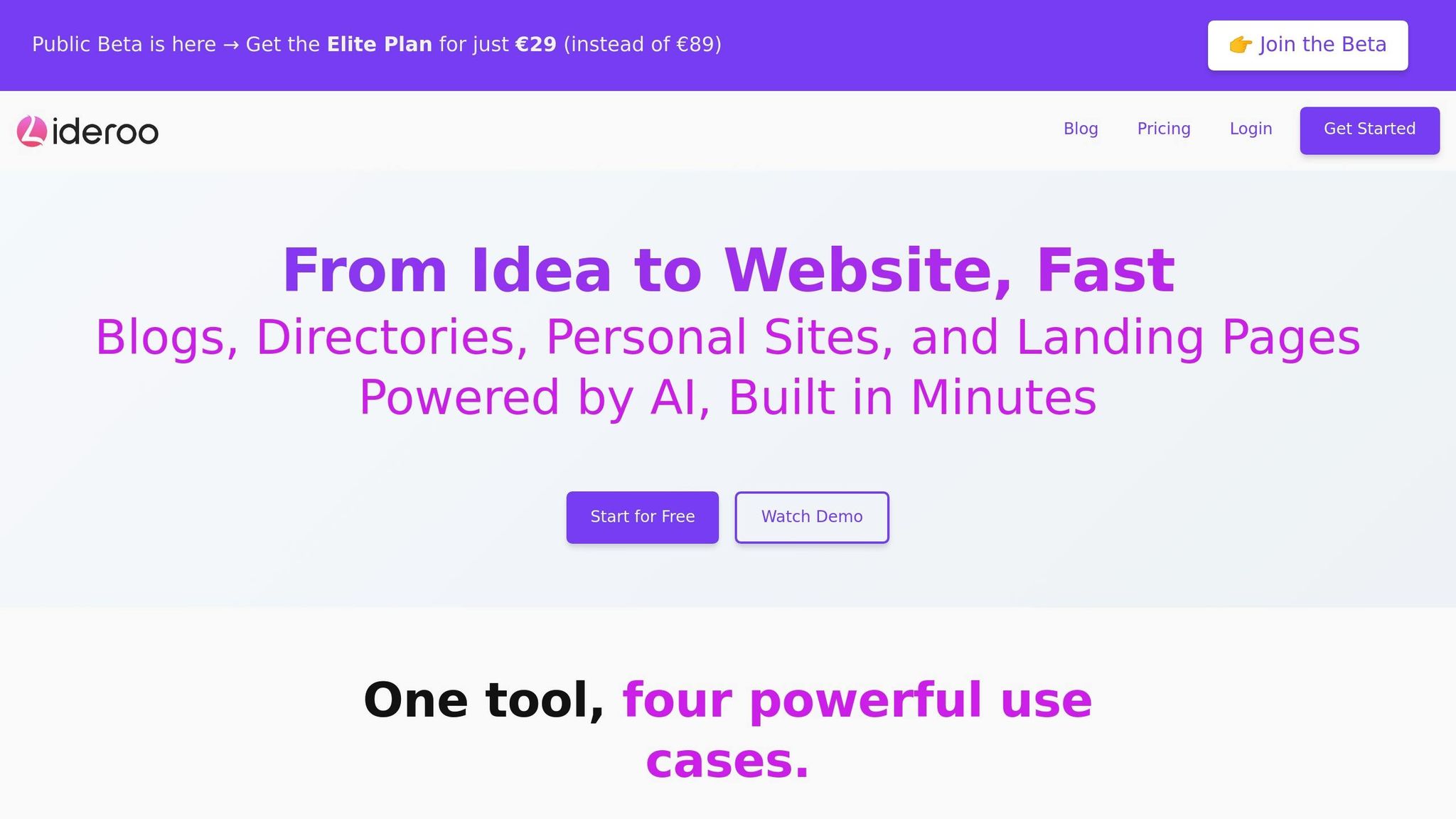
Traditional analytics tools often leave users juggling data and struggling to act on insights without a technical background. AI-powered platforms like Lideroo break down these barriers by combining analytics with built-in optimization features. Instead of using one tool to analyze traffic and another to implement changes, Lideroo offers a seamless, all-in-one solution. This is especially helpful for small business owners and bloggers who need to make the most of their time and resources.
Below, we’ll explore how Lideroo turns raw data into practical improvements, focusing on features that simplify traffic optimization and website management.
Features for AI Traffic Optimization
Lideroo uses AI to create a feedback loop between analytics and content generation. When the platform identifies trends - like high-performing topics or formats - it helps you create similar content, removing the guesswork from your strategy.
It also automates technical SEO tasks. Things like meta tags, XML sitemaps, and schema markup are handled behind the scenes, so you don’t have to spend time on manual adjustments.
Real-time monitoring is another standout feature. Instead of switching between tools, you can make immediate changes based on performance data, thanks to Lideroo’s integration with your content management system.
For those focused on monetization, Lideroo’s tools analyze which content drives the most engagement and revenue. Features like premium content options and subscription plans can then be fine-tuned based on actual user behavior, helping you maximize your earning potential.
Simple Workflow for Non-Technical Users
Lideroo isn’t just powerful - it’s designed to be user-friendly, even for those without a technical background.
With its drag-and-drop editor, you can easily replicate high-performing layouts without touching a single line of code. The visual interface lets you see changes instantly, making it easy to experiment with new designs.
Pre-built templates take the guesswork out of creating effective layouts, incorporating proven design practices right from the start.
For collaborative teams, Lideroo’s user management features simplify workflows. Writers can focus on creating content while the platform handles the technical side. Role-based permissions ensure that key site elements stay protected.
If you’re managing multiple websites, Lideroo’s Agency plan supports up to 20 sites. This allows agencies to implement strategies across different projects from a single dashboard.
Conclusion
AI-driven traffic insights have reshaped the way websites approach performance optimization. Instead of relying on guesswork or surface-level metrics, these tools empower site owners to make data-based decisions that enhance engagement and drive revenue. The focus lies in understanding user behavior, identifying content trends, and seizing real-time opportunities for improvement.
The most effective websites today go beyond just gathering data. They leverage real-time monitoring, traffic segmentation, and content optimization tailored to actual user preferences - not assumptions. Whether it’s tracking critical metrics or analyzing user journeys, the ultimate aim is to turn insights into measurable outcomes.
However, many website owners struggle to transform raw data into meaningful actions. Traditional tools often overwhelm non-technical users, making it harder to tap into the full potential of analytics. This is where platforms like Lideroo step in. By blending analytics with built-in optimization tools, they simplify the process of converting traffic insights into tangible performance boosts.
AI traffic insights are setting the stage for even smarter tools in the future - tools that will streamline adjustments and save time. Whether you're running a personal blog or managing multiple client sites, investing in platforms that make analytics accessible can help you achieve better results with less effort. For those without technical expertise, these integrated solutions ensure that every insight leads to actionable improvements.
FAQs
How can small business owners use AI traffic insights without an analytics team?
AI-powered traffic insights give small business owners a clearer picture of customer behavior, help predict upcoming trends, and fine-tune their strategies - all without requiring a specialized analytics team. By automating the heavy lifting of data analysis, AI uncovers opportunities to enhance marketing campaigns, increase user engagement, and streamline inventory management.
This technology levels the playing field, making smart, data-driven decisions attainable for businesses with tighter budgets. It allows them to run more efficiently and hold their ground in a competitive market.
How can AI help identify and fix content gaps on a website?
AI plays a key role in identifying and addressing content gaps on your website. By analyzing your existing content, conducting keyword research, and comparing your site to competitors, it pinpoints missing topics or areas where your content might fall short in meeting user expectations.
With AI-powered insights, you can uncover trending and relevant topics that resonate with your audience. These insights allow you to create content that not only fills those gaps but also enhances user engagement and strengthens your website's overall performance.
What makes AI-powered real-time traffic monitoring different from traditional analytics tools?
AI-powered real-time traffic monitoring offers a distinct advantage by analyzing data the moment it’s created. This means patterns and anomalies can be identified right away, enabling swift action. Traditional analytics tools, however, often depend on batch processing of historical data, which can slow down the delivery of actionable insights.
Another edge of AI systems is their ability to use machine learning for predicting future traffic trends and adjusting performance dynamically. This allows for a more forward-thinking approach. In contrast, traditional tools typically focus on analyzing past data, which limits their effectiveness in making decisions on the fly. These AI-driven insights play a key role in enhancing website performance and keeping users engaged.