
AI chatbots are transforming how businesses interact with customers in 2025. With over 80% of customer interactions involving chatbots by year-end, companies are leveraging no-code platforms to integrate AI quickly and efficiently. These platforms allow businesses to deploy chatbots without technical expertise, saving time and reducing costs.
Key highlights:
- 72% of companies use AI, with 70% of new enterprise apps relying on no-code or low-code tech.
- Chatbots are projected to save businesses $8 billion annually.
- Platforms like Lideroo, Intercom, and Gupshup offer different strengths for chatbot deployment, from ease of use to advanced customization.
Quick Comparison
| Platform | Strengths | Challenges | Best For |
|---|---|---|---|
| Lideroo | Easy setup, monetization tools | Limited customization | Small businesses, quick launches |
| Intercom | Advanced AI, scalable features | Steeper learning curve | Enterprises, technical teams |
| Gupshup | Multi-channel support | AI refinement needed | Marketing, commerce operations |
No-code platforms are making AI chatbot deployment faster and more accessible, helping businesses of all sizes improve customer engagement and streamline operations.
Build & Sell AI Chatbots Without Coding | Beginner's Guide 2025
1. Lideroo
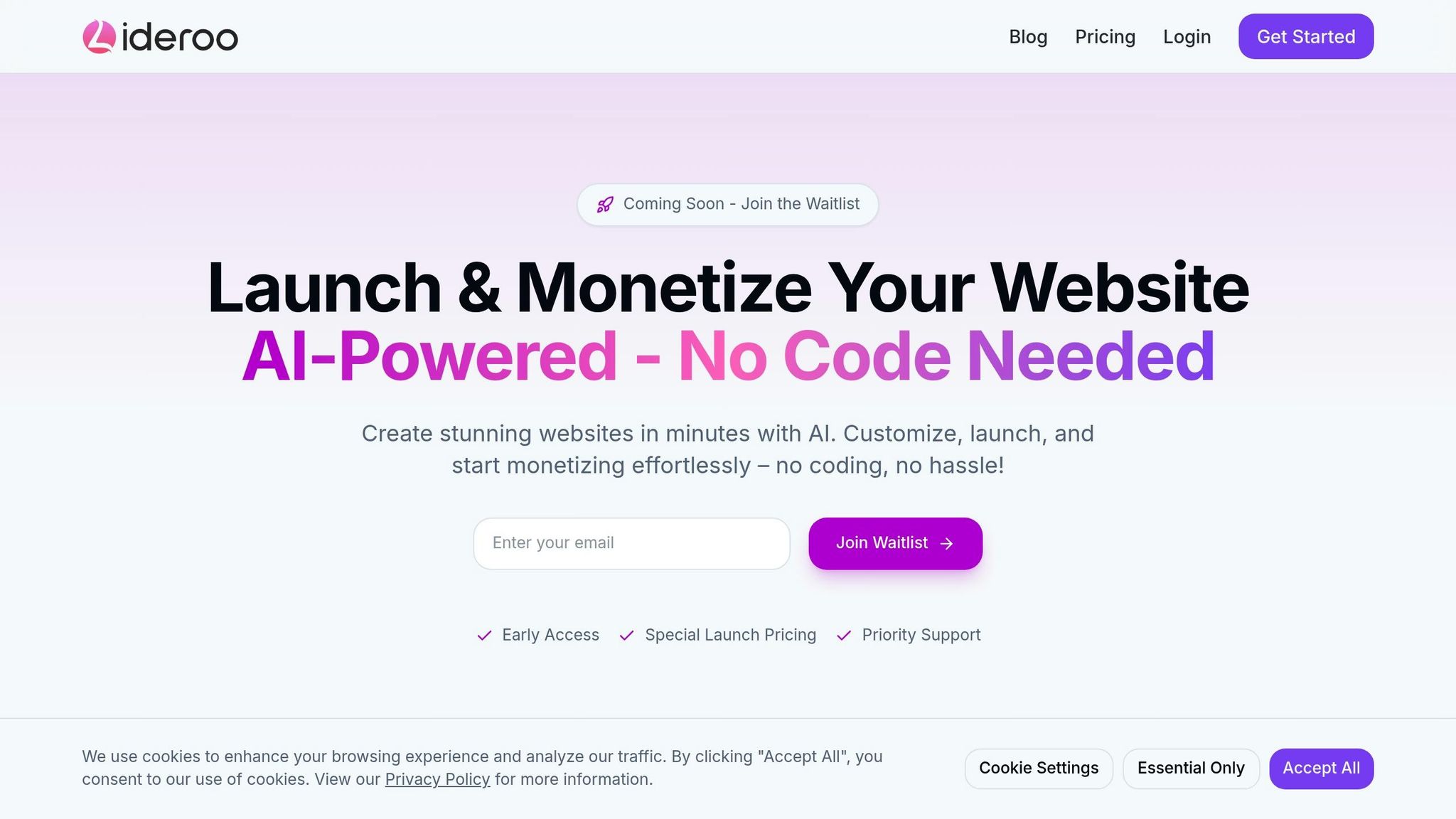
Lideroo combines website building with advanced AI chatbot technology, creating a platform that simplifies automation while enhancing user interaction.
AI Capabilities
At its core, Lideroo's AI runs multiple specialized agents simultaneously. These agents tackle tasks like scheduling, summarizing documents, and updating CRM systems, all while sharing context to ensure smooth and cohesive interactions.
The platform features a visual builder that lets users customize chatbot instructions without needing coding skills. Chatbots can be trained using a variety of data sources, such as help documents, websites, and internal files, building a rich knowledge base for more accurate and intelligent responses.
These AI-driven tools also integrate seamlessly with essential business systems, making the platform highly versatile.
Integration Options
Lideroo enhances its AI capabilities by connecting with popular tools like Slack, Notion, Gmail, Salesforce, and HubSpot. This allows chatbots to access and update data across different platforms, ensuring consistent and efficient workflows.
For critical actions, Lideroo includes Human-In-The-Loop (HITL) modules, which require human confirmation before execution. This ensures that while routine tasks are automated, important decisions remain under human control. The platform also features intelligent handoff capabilities, smoothly transitioning conversations from chatbots to human agents when necessary, maintaining a balance between automation and personal support.
Monetization Features
Lideroo empowers website owners to turn chatbot interactions into revenue streams. Paid plans start at $59/month (Starter), offering basic monetization options. The Agency plan, priced at $359/month, unlocks advanced features like premium content delivery, subscription services, and payment processing through chatbot-enabled websites. These tools help businesses transform customer interactions into income opportunities.
Scalability
Designed to grow with your business, Lideroo's architecture supports everything from small operations to enterprise-level deployments. Its ability to manage multiple AI agents simultaneously makes it a great fit for businesses scaling their automation needs.
The Agency plan supports up to 20 websites, each with its own custom chatbot setup, while still leveraging shared knowledge bases and integrations. For added convenience, Lideroo Academy provides 24/7 support and ready-to-use templates, helping businesses deploy and expand their chatbot capabilities with ease. This combination of scalable tech and dedicated support ensures businesses can grow without technical hurdles.
2. Intercom
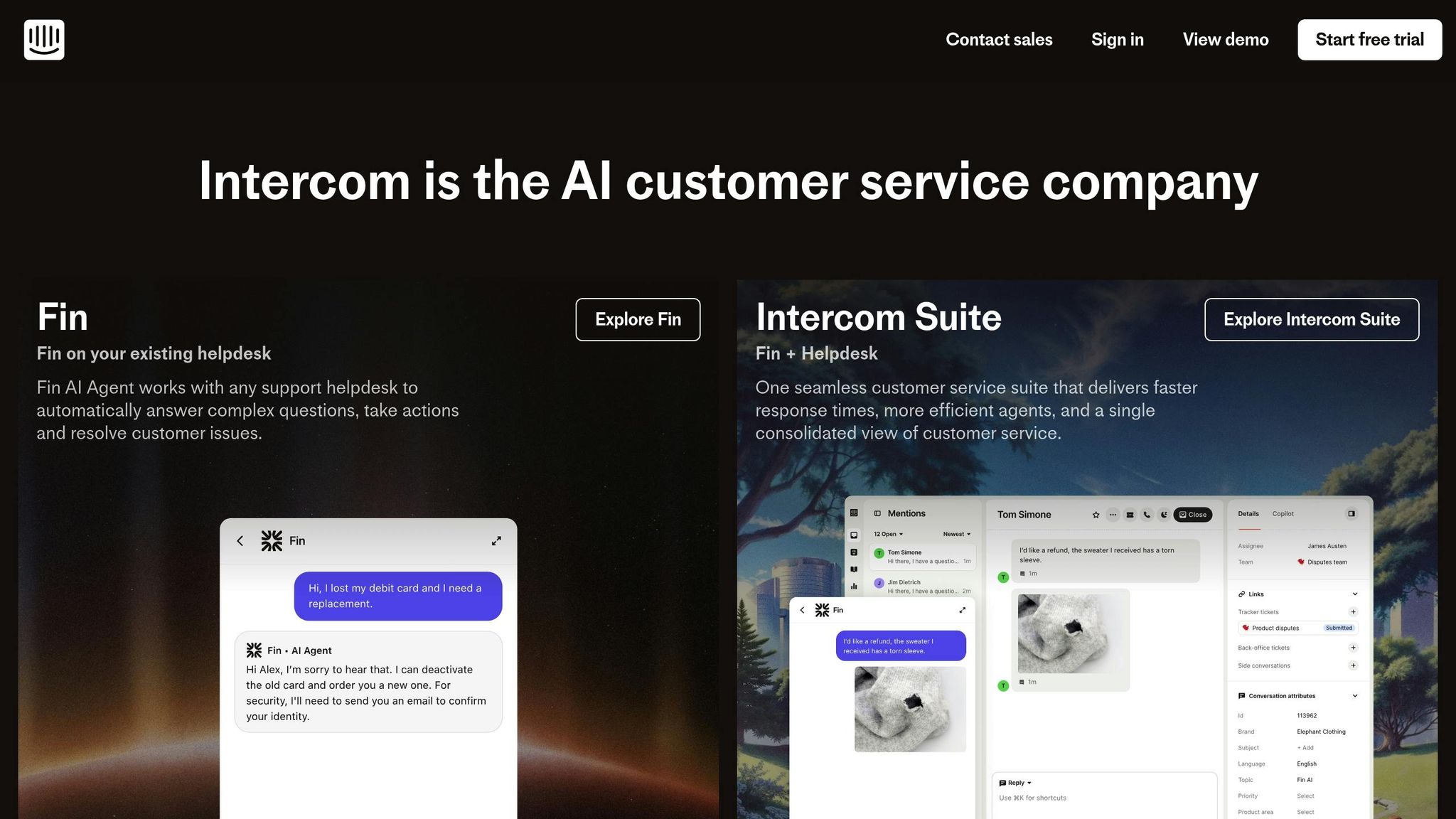
Intercom stands out as a strong contender in the customer service space, blending advanced AI chatbot technology with seamless support tools. Let’s dive into how its features stack up against other leading platforms.
AI Capabilities
Intercom's Fin AI Agent uses existing Help Center content to deliver contextual responses that align with your brand's voice. The best part? You don’t need to rebuild your knowledge base from scratch, ensuring consistency and accuracy in every interaction.
On top of that, the AI Copilot enhances agent efficiency by suggesting responses, auto-filling ticket details, and nudging agents with follow-up prompts. This combination of automation and human oversight keeps workflows smooth and effective.
In testing, the Fin AI Agent has proven capable of independently resolving a significant portion of tier-one customer queries [1].
Integration Options
Intercom makes integration simple with its visual development tools. Using drag-and-drop editors and pre-built components, businesses can customize workflows without any coding expertise.
The platform also transforms raw data into personalized interfaces and automations, syncing customer information across all touchpoints for a unified experience.
Monetization Features
Intercom’s pricing structure reflects the value of AI-driven support. The Essential Plan is priced at $29 per seat per month (billed annually), while the Fin AI Agent costs $0.99 per resolution.
This pay-per-resolution model ties AI usage directly to measurable service outcomes, offering clear cost savings.
Scalability
Intercom’s infrastructure is designed to handle growing customer demands. It supports high traffic volumes and complex interactions without compromising performance.
Additionally, its adaptive learning capabilities ensure the chatbot evolves alongside your business needs, keeping pace with customer expectations and challenges.
sbb-itb-dfa823a
3. Gupshup
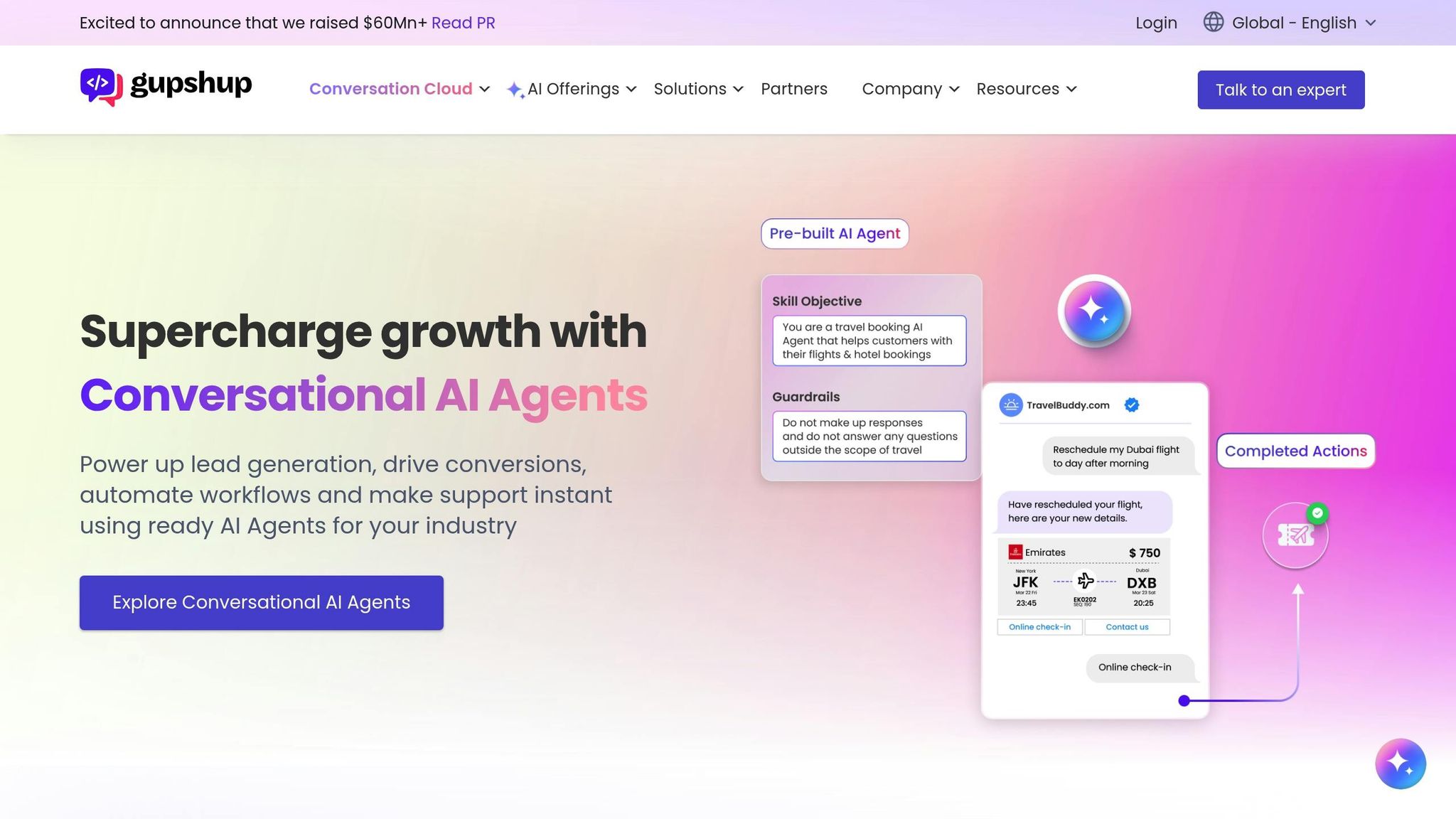
Gupshup takes a user-friendly approach to no-code chatbot creation, emphasizing multi-channel deployment and an intuitive visual bot-building experience. It enables businesses to connect with customers across a variety of messaging platforms - all without needing technical expertise.
AI Capabilities
At the heart of Gupshup's AI features is its low-code bot builder, which allows users to design chat flows visually and even auto-generate chatbots directly from website content [3]. This automated process simplifies setup, making it easier for businesses to create functional bots from their existing resources. The platform also integrates AI agents and APIs, enabling businesses to scale marketing and commerce operations with flexibility [3]. However, independent tests indicate that Gupshup's AI could benefit from further refinement to enhance its overall efficiency [2].
Integration Options
One of Gupshup's standout features is its robust multi-channel support. Businesses can build, manage, and optimize chatbots across over 30 platforms, including WhatsApp, SMS, voice, and web interfaces [3]. The platform also offers rich messaging capabilities and built-in analytics to monitor performance across these channels [2]. This extensive multi-channel support equips businesses to implement effective strategies for driving revenue.
Monetization Features
Gupshup is designed to help businesses turn conversations into sales. Through API integrations, it connects with existing systems to automate processes like customer engagement and sales. By combining marketing automation with conversational commerce flows, the platform supports businesses in converting interactions into revenue. Pricing details, however, depend on factors like usage volume and channel preferences.
Platform Strengths and Weaknesses
Platforms come with their own set of advantages and trade-offs, shaping the way businesses choose the right tools for their needs. Let’s break down the strengths and challenges of two popular options, based on earlier platform-specific analyses.
Lideroo stands out for its simplicity and speed. If you’re looking to get an AI-powered website up and running quickly, this platform is a great fit. Its drag-and-drop interface and pre-built templates make it incredibly user-friendly, even for those without technical expertise. Plus, the built-in monetization tools make it easy to start generating revenue right away. That said, its ease of use comes at the cost of limited advanced customization options, which might not meet the needs of users looking for more technical flexibility.
Intercom, on the other hand, is geared toward those seeking advanced technical capabilities. It’s packed with robust API integrations and sophisticated AI features, making it a favorite for teams with the technical know-how to fully leverage its potential. Its scalability makes it a solid choice for enterprises, but the platform’s complexity means there’s a steeper learning curve. This highlights a clear trade-off: while it offers immense customization, it’s not as beginner-friendly as Lideroo.
Platforms also vary in pricing, with models ranging from straightforward pay-per-request plans to tailored enterprise solutions. Integration options, as discussed earlier, play a crucial role in shaping how businesses implement these platforms.
| Platform | Key Strengths | Primary Weaknesses | Best For |
|---|---|---|---|
| Lideroo | Quick setup, built-in monetization, user-friendly interface | Limited advanced customization options | Small businesses, content creators, quick deployment |
| Intercom | Advanced AI capabilities, extensive API integrations, scalability | Steep learning curve; requires technical expertise | Developers, enterprises, complex implementations |
Conclusion
The rise of AI chatbots within no-code platforms is reshaping how businesses handle customer engagement and automation as we move into 2025. With AI chatbots now driving 95% of customer interactions and the market expected to grow from $11.14 billion in 2025 to $31.11 billion by 2029, boasting an annual growth rate of 29.3% [4], the momentum behind this technology is undeniable.
No-code platforms are breaking down traditional barriers to AI implementation. What once demanded months of development, hefty budgets, and specialized teams can now be achieved in a matter of days. These platforms make deploying advanced conversational AI fast, cost-effective, and accessible for businesses of all sizes, leveling the playing field in ways that were unthinkable just a few years ago.
When choosing a no-code platform, organizations must consider their unique needs and technical requirements. For example, Lideroo is an excellent choice for small businesses and content creators seeking speed and built-in monetization features, allowing them to start generating revenue almost immediately. On the other hand, enterprises with complex needs, such as advanced API integrations and technical customizations, may find more suitable options elsewhere - though these often require a higher level of expertise. This shift from static, rule-based systems to dynamic AI-powered solutions is ushering in a new era for customer service.
Ultimately, success hinges on aligning platform capabilities with business goals, ensuring smooth integration, and prioritizing user security. The real question isn't whether to embrace AI chatbots, but which solution will best meet your organization's objectives and technical demands.
FAQs
How can small businesses use no-code platforms like Lideroo to add AI chatbots without needing technical skills?
No-code platforms like Lideroo are transforming how small businesses integrate AI chatbots. Thanks to simple drag-and-drop tools and ready-made templates, anyone can design chatbots that fit their specific needs - no coding skills needed. These chatbots can handle tasks like automating customer support, answering FAQs, and boosting user engagement with ease.
What makes Lideroo stand out is its AI-powered features that take the hassle out of the setup process. Businesses can focus on what really matters - delivering great service - while the platform handles the tech side. Whether it’s streamlining conversations or offering round-the-clock support, all it takes is a few clicks to get started!
How does Lideroo's AI chatbot integration compare to other tools for 2025?
Lideroo is all about making website creation and monetization a breeze. With AI-powered content tools and intuitive drag-and-drop customization, users can build and manage their sites with minimal effort. The platform's AI is designed to simplify every step, from creating engaging content to managing users and generating revenue through features like premium content and subscription plans.
What sets Lideroo apart is its targeted approach. While other platforms might focus on customer support or chat-based interactions, Lideroo is specifically designed for website development. It’s particularly suited for building directory websites and blogs, with AI tools fine-tuned for content creation, SEO improvements, and monetization strategies, rather than generic chatbot functionalities.
What factors should businesses evaluate when selecting a no-code platform for AI chatbot integration in 2025?
When choosing a no-code platform for AI chatbot integration in 2025, there are several important aspects to keep in mind:
- Ease of use: Look for platforms that simplify the process with features like drag-and-drop editors and pre-built templates. These tools can make chatbot development quicker and less complicated.
- Scalability: Make sure the platform can handle your business's growth, whether that's accommodating higher traffic or adding advanced functionality down the line.
- Integration capabilities: Check if the platform connects effortlessly with your existing systems, like CRMs, payment gateways, or analytics tools. Seamless integration can save time and reduce headaches.
- Security: Protecting customer data is non-negotiable. Choose a platform with strong security measures to keep sensitive information safe.
- End-to-end support: Select a solution that not only helps you build and deploy your chatbot but also provides tools for ongoing maintenance and updates.
By focusing on these criteria, businesses can find a no-code platform that fits their needs and ensures a smooth rollout of AI chatbot technology.